Riding the rapids with the Ojibwa was a popular pastime around 1900.
Sault Ste. Marie and the rapids of the St. Mary’s River provided an obstacle to Lake Superior. The cataracts of the river cascaded for a mile and no large ships could make it over them. For the local Native Americans, this was no object. Using their canoes, they would fish the rapids. They were able to navigate up and down the river with relative ease. Sault Ste Marie was their home and had been for untold generations and were one with the river. For entertainment they would shoot the whitewater.
One of the rapids guides, John Bouchet, a well known and respected Native American was one of several river guides.
When Sault Ste. Marie began to grow and passenger ships began bringing passengers and tourists to the area, The local Ojibway began taking those with stout hearts on a local adventure they would never forget, shooting the rapids of the St. Mary’s River.
The rapids pilot dock. The canoe Kingfisher is also featured in the top picture front canoe. In the horizon another canoe can be seen racing the rapids.
By all accounts, this was a wild ride. It was a mile of rocks and water, racing and tumbling, the birch bark canoes sliding over and between the rocks that could destroy the vessels in an unpredictable moment.
Shooting the Rapids with a Native American guide poling the canoe through the rapids.
Eventually Soo Locks expansions and a dam built across the river to regulate water levels, riding down the rapids came to an end.
Found in the Sault News picked up from Iron Mountain Gazette, 9/25/1901.
The following snake story comes from Pembine says the Iron Mountain Gazette: “Mr. McCormick, a foreman on the Soo railroad, and his crew were attacked by a swarm of snakes while digging out a culvert in the railroad, and Mr. McCormick and his six men fought the snakes for fully two hours. ‘We had to use shovels, iron bars and axes to conquer the reptiles,’ McCormack says there were over five hundred of them and the shortest one was three feet long. After the fight was over, the snakes were piled up like a log pile and burned. The snake oil ran from the fire like a flowing spring. The like was never before known in the north. ‘I have traveled the world half over and saw reptiles as thick as the hair on a dog’s back, but the like of this scene I never witnessed and do not expect to witness it again.'”
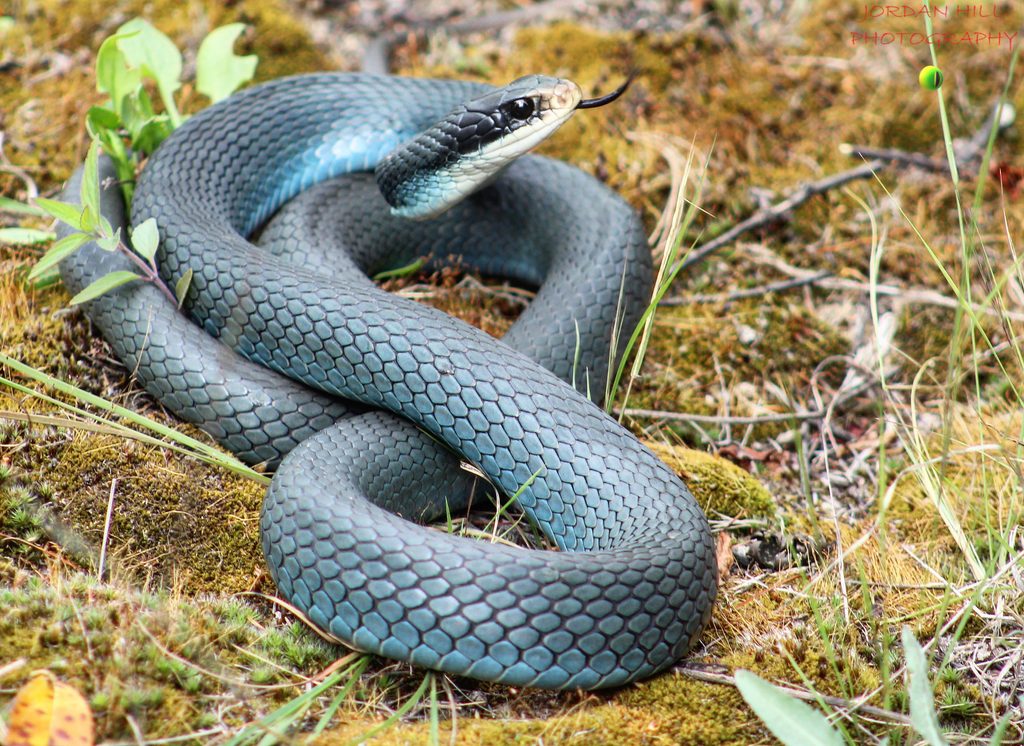
Blue Racer Snakes grow to three feet or more long.
Authors Note: I think the workers dug into a nest of Blue Racer snakes. They are common throughout Michigan and Wisconsin including the southern Upper Peninsula. Blue Racers commonly grow to lengths of three to six feet long. They are very fast and are non-venomous though they can act formidable.
For more information on Blue Racer Snakes, click here.
This article contains never before seen photos of the Zenith City taken at Sault Ste. Marie, Michigan. They are part of the Mikel B. Classen Collection of Historical Pictures.
The S.S. Zenith City slowly makes its way into the Soo Locks.
The Zenith City was a classic freighter ship of its day. It sailed throughout the Great Lakes for many years, and was the longest ship of its day at 387 ft. Launched in 1895 in Chicago, the Zenith City traveled throughout the Great Lakes hauling iron ore back and forth.
The ship sailed without mishap until July 26, 1910, when it ran aground at Au Sable Point in Lake Superior. There was a thick fog and it hit Au Sable’s sandstone reef about a mile offshore. Fortunately, there wasn’t much damage and she was pulled off the reef and was able to resume well enough to get the ship somewhere it could be repaired. Several bottom plates had to be replaced, but it was soon back on the water on its way.
The bow of the Zenith City at Sault Ste. Marie in 1910.
Six years later, the Zenith City sank. It was a storm near Hammond Bay in Lake Huron. There is very little information about the wreck other than it sank and was then recovered. The Zenith City sailed again.
It continued hauling ore until World War II. The Zenith City was sold to the U.S. War Shipping Administration along with six other ships in 1943. The Zenith City then spent its time taking supplies to the war effort in Europe. One year later the ship was laid up. It would remain there. It was sold for scrap in 1946. The Zenith City was no more. The only memories remain in pictures.
A closer look at the bridge on the Zenith City going through the Soo Locks.
The other Water Street drawing that shows the identical layout as the other picture.
When I collect early historical drawings, I always wonder how accurate of a depiction they are. Artistic license and all of that. I came across these two engravings that were unrelated to each other except that the subject matter is the same, Water Street in Sault Ste. Marie around 1850, before the locks were built. Even the flagpole that is prominent in one can be seen in the other towards the back with no flag. It is not often one gets the opportunity to compare images this old side by side.
If you compare both pictures, it can be seen that the buildings and their positions are identical. This assures me that this is an accurate representation of 1850s Sault. Looking closely, it can be seen that some of the buildings are identified including the Chippewa House and the Ste. Marie Hotel. The look and feel for life in the early Sault can be plainly seen through the figures in both pictures. These pictures are probably 1-2 years apart with slightly different perspectives. The rails running down the middle of the street were used for moving cargo from one ship to another, above to below the St. Mary’s Rapids and vice versa. The rapids blocked access to Lake Superior from the lower Great Lakes.
The Details are in the Drawing
Drawings like these were the photographs of the day and offer many of our only insights into what life and the world looked like before cameras. Widespread camera usage didn’t come into being until late 1850s. Often used for publications the drawings accuracy was important to help inform the public of distant places. Much of it spurred tourism to “See the world” during the Victorian era.
Not only are they accurate, but many are finely detailed revealing tidbits like building names and images of life before film. These early artists took pride on precision in their depictions painstakingly recreating every minute detail. In most cases, these early engravings are as credible as photographs. Their historical value is priceless.
Wabishkee Penas, the guide that led Lewis Cass and Henry Schoolcraft to the Ontonagon Boulder.
In 1820, Territorial Governor Lewis Cass went on an expedition through Lake Superior to the Mississippi River. The Michigan Territory at the time extended to the great river. Accompanied by Henry Schoolcraft and Douglass Houghton, the expedition had determined to discover the validity of the existence of the legendary Ontonagon Boulder, an object sacred to the Ojibwa.
When the Cass expedition arrived at the mouth of the Ontonagon River, they asked the local natives for a guide. The Cass expedition consisted of native guides and interpreters. One agreed to take them to the boulder. His name was Wabishkee Penas (White Pigeon) and he expertly navigated the rugged Ontonagon River for Cass and his men. Arriving at the boulder, Schoolcraft and Houghton were underwhelmed with the two-ton copper mass. They thought it would be bigger.
When they returned, Governor Cass gave Wabishkee Penas a silver medal for guiding them to the boulder. They then packed up and proceeded further with their explorations. When Wabishkee Penas returned to the tribe he was met with derision. He had done something unforgivable. He gave away the location of the great sacred boulder to outsiders. In a final insult, he was sent away, exiled, ostracized from his tribe, shunned by all.
Col. Thomas McKenney
Col. Thomas L. McKenny, Indian Agent in 1826.
Six years later he reappears at the door of Col. Thomas McKenney insisting on seeing Governor Cass. Cass and McKenney was attending a treaty signing in Fond du Lac, (at that time, Fond du Lac referred to the western part of Lake Superior) Minnesota and Mc Kenney was the current Indian agent. McKenny had set up offices in an old hut. Wabishkee Penas was emaciated and appeared to have spent most of his years hungry. Completely friendless, Wabishkee Penas sought the one person that might still greet him with a smile, Governor Cass. Around his neck still hung the silver medal.
Cass met with him. McKenney had his portrait painted. The resulting portrait is the first illustration above where his starvation and silver medal can be seen. McKenny would release a three-volume book called the “History of the Indian Tribes of North America.” Wabishkee Penas portrait as seen above was published within its pages. For better or for worse forever enshrined in history.
For more information on Thomas McKenney, Click here.
Chief Satago and his wife. He is said to have been 108 years old.
Author’s note: The headline above says it all. I found this obituary in a 1911 copy of the Detroit Free Press. I was fascinated by the writeup of his life. I’ve reprinted this in its entirety.
St. Ignace, Mich., Sept. 28 – With the death of Chief Satago, passed away the most noted and historic personage in northern Michigan. From Chief Satago the poet Longfellow gleaned much material for “Hiawatha.” In the lodge of Chief Satago the poet spent much of his time more than a half century ago when in this north country in search of material.
Satago was a devout Roman Catholic, his ancestors being converted by Father Marquette. The most cherished event of his life was the fact that he was present when the remains of the great missionary and discoverer were disinterred from the ruins of the old mission church by Father Jacker. From his chieftain father he often heard of the wonderful cortege of 30 canoes that bore Marquette’s body up Lake Michigan to the mission here.
Author’s Note: About the last paragraph above, It says that Satago was 108 years old in 1911. That makes his birth year 1803. Father Marquette’s bones were returned to St. Ignace in 1677. It was impossible that Satago was an actual witness to this as the obituary implies.
Listen to the full podcast interview of Mikel B. Classen on Emma Palova’s show “For the Love of Books” by clicking on the play button the bar below
Join us as we dive into the fascinating world of piracy on the Great Lakes, a topic often overshadowed by the more notorious Caribbean pirates. In this blog, we explore the stories of lesser-known pirates, their exploits, and the rich history that surrounds them, as shared by author Mikel B. Classen.
Introduction to the Podcast
Welcome to our exploration of the captivating tales of piracy on the Great Lakes. In this podcast, we are privileged to delve into the world of lesser-known maritime adventures, blending history with storytelling. Our discussions focus on the unique narratives that shaped the Great Lakes, highlighting the contributions of local authors and historians.
Meet Mikel Classen
Mikel Classen is not just an author; he is a storyteller who breathes life into the history of Northern Michigan. With over forty years of experience in journalism, he has dedicated his career to uncovering the hidden stories of the region. His passion for the past is evident in his writing and photography, capturing the essence of Michigan’s North Country.
As the founder of the UP Reader and a board member of the Upper Peninsula Publishers and Authors Association, Mikel champions local literature. His extensive research into the Great Lakes’ piracy reveals a world that many have overlooked. His insights offer a fresh perspective on this intriguing subject.
The First Day of Spring
Spring is a time of renewal and awakening, even in the chilly climates of Northern Michigan. As the snow begins to melt, the landscape transforms, revealing the vibrant life that lies beneath. This season symbolizes hope and new beginnings, much like the stories of piracy we’re about to explore.
On this first day of spring, we reflect on the resilience of those who lived along the Great Lakes. Their tales of adventure and survival continue to inspire us, reminding us that history is not just about dates and events, but the lives that were lived in between.
Review of ‘Piracy on the Great Lakes’
In ‘Piracy on the Great Lakes‘, Mikel Classen invites readers into a world filled with daring exploits and rich narratives. The book is not only informative but also engaging, filled with rare period photographs and engravings that bring the stories to life. Sue Harrison, an international bestselling historical novelist, praises the fast-paced narrative that captures the essence of these unique pirates.
“This book serves as a gateway into a lesser-known history, filled with tales of treasure and adventure that rival those of Caribbean pirates. Classen’s meticulous research ensures that each story is grounded in fact, allowing readers to immerse themselves in the world of Great Lakes piracy.” – Sue Harrison.
Overview of Great Lakes Piracy
The final cover for my new book, Piracy on the Great Lakes – True Tales of Freshwater Pirates.
The Great Lakes were once a bustling hub of trade and commerce, attracting not only merchants but also pirates. Unlike their Caribbean counterparts, Great Lakes pirates targeted cargo ships laden with valuable goods such as furs, timber, and grain. The competition for these resources often led to violent confrontations on the water.
These pirates were not just random outlaws; they were often connected to the very industries that thrived in the region. Their motivations were complex, driven by economic necessity and the allure of wealth. The stories of these pirates reveal a fascinating intersection of history, culture, and survival.
The Fur Trade and Early Pirates
The fur trade was a driving force behind early piracy on the Great Lakes. Companies like the Northwest Fur Company and the Hudson Bay Company engaged in fierce competition, leading to conflicts that would spill over into piracy. The riches of the fur trade made it a target for those willing to risk everything for a chance at wealth.
Voyageurs, the skilled canoeists of the fur trade, often found themselves caught in the crossfire. These men were not just transporting goods; they were navigating a treacherous landscape filled with rival companies and opportunistic pirates. The allure of furs, often referred to as “gold,” fueled many of these pirate ventures.
The Apostle Pirates
Among the most intriguing stories is that of the Apostle Pirates, who operated out of the Apostle Islands during the fur trade era. This group was notorious for their daring raids on French canoes and military payrolls. Their audacity and cunning made them legends in their own right.
Interestingly, these pirates adopted biblical names, calling themselves the Apostles. Their leader, simply known as “the chief,” almost chose a more divine name. This unique blend of piracy and religious symbolism adds a layer of complexity to their story, illustrating the multifaceted nature of these individuals.
Geography of the Apostle Islands
The Apostle Islands are not just a picturesque destination; they were a strategic haven for pirates. Nestled in Lake Superior, these islands provided natural cover and refuge for those looking to evade capture. Their rugged terrain and hidden coves made them ideal for launching surprise attacks.
Today, the Apostle Islands remain a popular destination for outdoor enthusiasts and history buffs alike. Their beauty is matched only by the stories they hold, reminding us of a time when the waters were filled with both adventure and danger.
Comparison with Caribbean Pirates
While Caribbean pirates are often romanticized in popular culture, Great Lakes pirates present a different narrative. Caribbean piracy revolved around treasure ships laden with gold and silver, whereas Great Lakes piracy was focused on trade goods essential for survival and commerce.
Great Lakes pirates operated in a world defined by competition and local economies. Their actions were closely tied to the fur trade and other industries, reflecting the socio-economic realities of their time. This distinction highlights the diverse nature of piracy and the various factors that drove individuals to piracy across different regions.
Discovery of the Freshwater Pirate Idea
The journey into the world of freshwater piracy began serendipitously. While conducting historical research in Marquette, I stumbled upon a folder labeled “Legends.” Such a title piqued my curiosity, prompting me to dive deeper into its contents. Within those pages, I found the captivating story of Dan Seavey, a pirate who operated out of Escanaba.
This discovery ignited a passion within me to explore the tales of Great Lakes piracy. Initially published in the 1980s, my work on Seavey laid the groundwork for a broader investigation into this largely overlooked chapter of history. As I delved deeper, I realized that Seavey was just one of many intriguing figures in the Great Lakes’ maritime lore.
The Story of Dan Seavey
Dan Seavey’s tale is one of both charm and chaos. Known as the most famous Great Lakes pirate, his exploits are a blend of audacity and mischief. Seavey was notorious for his cunning, often outsmarting authorities and rival pirates alike.
His most infamous act involved the ship Nellie Johnson, from which he allegedly threw the crew overboard. This dramatic event culminated in a piracy trial—the only one of its kind on the Great Lakes. The absence of witnesses allowed him to escape conviction, a testament to his cleverness and the chaotic nature of maritime law at the time.
Seavey’s life was a mix of piracy and legitimate ventures, including running a sawmill. His dual existence illustrates the blurred lines between legality and outlawry in the turbulent waters of the Great Lakes.
Michigan Historical Society Presentation
My presentation at the Michigan Historical Society was a pivotal moment in my exploration of Great Lakes piracy. The audience’s enthusiasm was palpable, with standing room only, indicating a deep-seated interest in this obscure topic.
During the presentation, I shared not only Seavey’s story but also touched on other pirates who roamed these waters. This engagement reinforced the idea that many people are unaware of the rich tapestry of piracy in their own backyard.
The reception was encouraging, pushing me to further expand my research and ultimately leading to the publication of my book on the subject. The presentation served as a rallying point, connecting a community eager to learn about their maritime history.
The Mormon King: James Jesse Strang
James Jesse Strang, often referred to as the Mormon King, presents a fascinating figure in the annals of Great Lakes piracy. Strang claimed divine authority, asserting that the islands in the Great Lakes were rightfully for the Mormons. His self-proclaimed kingship led to the formation of a pirate fleet, as he believed they were entitled to seize resources from the surrounding areas.
Strang’s followers were loyal and fervently believed in his vision. They raided islands, commandeering livestock and supplies, operating under the misguided notion that they were fulfilling a divine mandate. This blend of religious zeal and piracy adds an intriguing layer to the narrative of Great Lakes piracy.
Research Process for the Book
The research process for the book was extensive and multifaceted. I spent significant time at the Delta County Historical Society, uncovering hidden gems of information about Seavey and his contemporaries. Additionally, my personal library, filled with out-of-print history books, proved invaluable.
In one particularly fruitful find, I discovered a photograph of Seavey with his daughter, a rare glimpse into his personal life. This image and many others enriched the narrative, allowing readers to connect with the human side of these pirates.
Each piece of information I gathered contributed to a fuller understanding of the socio-economic conditions that fostered piracy. It was a labor of love, as each discovery brought me closer to the truth behind these captivating characters.
The Life of Dan Seavey
Dan Seavey was a man of contradictions. He was known for his generosity, famously offering his shirt to those in need, only to pilfer it back at the first opportunity. This duality made him a complex figure, embodying both the charm and chaos of piracy.
Seavey’s life was not solely marked by his illegal activities; he also served as a U.S. Marshal. His time in law enforcement, however, was marked by misadventures that often led him back to his pirate roots. His notorious reputation for drinking and brawling became part of his legend.
One memorable incident involved a drunken brawl where he famously used a piano as a weapon, leading to unintended consequences. Such stories illustrate the tumultuous nature of his life and the fine line between law and lawlessness on the Great Lakes.
Dual Nature of Pirates
Great Lakes pirates often embodied a dual nature, balancing between villainy and community service. Many were deeply intertwined with local economies, making their actions more complex than mere criminality. Their motivations were often rooted in survival, driven by economic pressures and the allure of wealth.
This duality challenges the traditional notions of piracy. They were not always the ruthless criminals depicted in popular culture; instead, they were individuals navigating a precarious existence. This complexity adds depth to their stories, revealing the human side of piracy.
The Gray Ghost Rum Runner
Among the most intriguing figures in this narrative is the Gray Ghost, a mysterious rum runner during Prohibition. Operating out of Detroit, he was known for his stealth, often navigating the foggy waters in a boat painted gray to avoid detection.
The Gray Ghost played a crucial role in smuggling operations, taking advantage of Canada’s lack of prohibition laws. His operations highlight the bustling underground economy that thrived during this time, with a staggering $212 million worth of alcohol crossing the Canadian border in just one year.
This figure exemplifies the cunning and resourcefulness of those engaged in smuggling, illustrating how piracy evolved in the context of changing laws and societal norms.
The Scale of Smuggling During Prohibition
The scale of smuggling during Prohibition was staggering, transforming the Great Lakes into a hotbed of illegal activity. The lucrative trade in alcohol brought together various players, from organized crime syndicates to independent smugglers like the Gray Ghost.
Detroit became a central hub for these operations, with boats transporting money for liquor across the border. The sheer volume of alcohol being smuggled underscores the desperation and demand for illicit goods during this era.
The Great Lakes, with their vast network of waterways, allowed for a fluid exchange of goods, making it an ideal setting for smuggling operations. This intricate web of commerce paints a vivid picture of the underbelly of society during one of the most controversial periods in American history.
Recurring Themes of Piracy
The exploration of piracy on the Great Lakes reveals several recurring themes that echo through the ages. One prominent theme is the constant struggle for survival. Pirates often operated in desperate conditions, driven by the need for resources. This need transformed them into opportunists in a world where legal enforcement was minimal.
Another recurring theme is the blurred line between legality and illegality. Many pirates were once legitimate traders who turned to piracy out of necessity. Their actions, while illegal, often stemmed from a complex interplay of economic pressures and moral ambiguity.
Additionally, the theme of community plays a crucial role. Pirates were often part of local economies, and their exploits impacted the communities around them. This duality creates a rich tapestry of stories that challenge our perceptions of piracy.
Unique Research Findings
In my research, I uncovered fascinating details that challenge conventional narratives about piracy. For instance, the Great Lakes were not just a backdrop for piracy; they were a thriving ecosystem where piracy was interwoven with local economies.
Many pirates had deep ties to their communities, often sharing resources and information. This interconnectedness complicates the idea of the lone pirate, revealing a network of relationships that facilitated their activities.
Moreover, the lack of effective law enforcement until the establishment of the Coast Guard allowed piracy to flourish. The USS Michigan, the sole law enforcement vessel, could only cover so much territory, leaving vast areas vulnerable to piracy.
Common Misconceptions in Pirate History
Many misconceptions surround the history of piracy, particularly concerning the Great Lakes. One prevalent myth is that piracy was solely a male-dominated activity. In reality, women played significant roles, both as pirates and as essential figures in supporting their operations.
Another common misconception is that piracy was always violent and chaotic. While there were certainly brutal encounters, many pirates operated with a level of strategy and negotiation. They often preferred to avoid bloodshed, recognizing that alive crews were more valuable than corpses.
Additionally, the notion that all pirates were after gold and treasure is misleading. Great Lakes pirates focused on trade goods, such as furs and timber, essential for survival. This shift in focus provides a deeper understanding of their motivations and actions.
Future Writing Projects
Looking ahead, I am excited about my upcoming projects. The next book in the Yooper History Hunter series will delve into Grand Island, rich in history and adventure. This guide aims to inspire readers to explore lesser-known historical sites.
I plan to incorporate more stories of local figures who shaped the region’s history, including pirates. By shedding light on these characters, I hope to encourage a deeper appreciation for our maritime heritage.
Additionally, I am considering a project that addresses common myths about the Great Lakes and their histories. This initiative will aim to educate the public and provide a more nuanced understanding of the area.
A Reading from ‘Piracy on the Great Lakes’
As I delve into the first chapter of ‘Piracy on the Great Lakes,’ I want to emphasize the distinct nature of piracy in this region. Unlike the romanticized depictions of Caribbean pirates, Great Lakes piracy was rooted in the pursuit of practical commodities.
These pirates were often hidden in the shadows, waiting for the right moment to strike. They would lure unsuspecting vessels into treacherous waters, ready to seize cargo and disappear into the night. This atmospheric tension is what makes their stories so captivating.
Through this reading, I aim to transport listeners into that world, where danger lurked behind every wave and the stakes were incredibly high. The stories of these pirates are not only thrilling but also serve as a reminder of the complexities of human nature.
Closing Thoughts
As we wrap up this exploration of Piracy on the Great Lakes, I invite you to reflect on the stories shared. These narratives are not just tales of adventure; they are windows into the past, revealing the complexities of human behavior and societal dynamics.
Remember, history is a living entity, shaped by the stories we tell and the lessons we learn. I encourage you to seek out these stories in your own communities and engage with the past.
Thank you for joining me on this journey. Keep exploring, keep questioning, and always be curious about the history that surrounds you!
Blows Up While On Convoy Duty! The Coast Guard cutter Escanaba, shown here in Lake Michigan while she was on duty in those waters, sank after an explosion ripped her amidships while on convoy duty in the Atlantic, the navy announced in Washington Friday. 6/19/1943
I recently received the picture with the caption printed above about the Coast Guard Cutter Escanaba. After doing some research I found the story to be one of the lingering mysteries of World War II, the strange fate of the USS Escanaba.
There are countless stories of the bravery and daring of those in the U.S. Coast Guard. Their basic mission is to protect the boundary waters of the United States. Occasionally they get called away from that specific duty when the need presents itself. World War II was just such a time. The USS Escanaba was just such a ship.
Lake Michigan and World War II
The USS Escanaba spent most of its time patrolling the waters of Lake Michigan. It was built in Bay City by the Defoe Shipbuilding company. The Escanaba was intended for ice breaking, law enforcement, and maritime search and rescue. Its home port was Grand Haven, Michigan. At the time, Escanaba was one of the busiest ports on Lake Michigan and the ship was named in honor of that city. The Escanaba performed several rescues of ship’s crews in distress on Lake Michigan.
USS Escanaba ice breaking on Lake Michigan before WWII.
During World War II, convoys of ships carrying supplies and ammunition crossed the Atlantic regularly. Many ships were ordered to protect these convoys at all costs. The USS Escanaba was called out of the Great Lakes to accompany and protect the ships of the supply convoys.
During this time, the Germans were filling the waters of the Atlantic with what were known as the “Wolfpacks,” groups of submarines that were attacking and sinking most ships they came across that weren’t allied with the Nazis. They had no discretion whether they were civilian ships or military. They sank them both. The wolfpacks fed on convoys.
Greenland Patrol and the USS Dorchester
The USS Escanaba was assigned to what was known as the Greenland Patrol. They would escort convoy headed through the North Atlantic. The cutter had been refitted with weaponry in Boston, such as depth charges for combatting the U-2 submarines. The Escanaba claimed to have sunk 3 subs during its time on escort.
This painting by Robert Lavin depicts the Escanaba rescuing the survivors of the USS Dorchester.
Coast Guard ships are known for their daring rescues and the USS Escanaba did its part. In February of 1943, they rescued the survivors from the USS Dorchester. The Dorchester was the victim of a submarine torpedo and sank in the icy February water. Many of the survivors were so cold that they couldn’t hang onto ropes or pull themselves up a ladder. Members of the crew of the Escanaba became for the first time, rescue swimmers who went into the water themselves to pull survivors onboard! It is the first documented use of “rescue swimmers.” They wore special survival suits and tied debilitated victims to ropes to be pulled aboard. They rescued 133 people that day. Out of the 50 they initially thought were dead, only 12 died. The others revived when they got warm.
Many of them were awarded medals for their actions and the rubber suit retrieval method invented by one of the Escanaba’s crew members, Lt. Robert Prause Jr. gained praise and the method earned a permanent place in cold water rescues.
USS Escanaba Mystery
Unfortunately, on June 10th, that same year, the USS Escanaba was blown to pieces. The ship was escorting another convoy in the North Atlantic when it suddenly burst into a ball of fire. It happened so fast, that they bever got off a distress signal. In a moment, the ship and crew were gone. Other ships in the convoy that saw it said that there was no sound. First ships arrived on the scene within 10 minutes. Only two survivors were found and one dead, the aforementioned Lt. Prause Jr. (It could be said that Lt. Prause posthumously went on to save countless lives with his cold-water suit invention.) The only reason the two survived is that their clothing had frozen to floating debris and prevented them from sinking to the bottom like the rest of their crew mates. 13 officers and 92 crewmen died that day.
Some of the crewmen from the USS Escanaba near the time of the explosion. Heroes all.
Theories
No one knows what caused the USS Escanaba to explode. Naturally, the predominant theory is that it was a victim of a German submarine. But, none were found in the area and torpedo explosions make a lot of noise. Another theory is that it hit an underwater mine. Thousands of these were used in World War II. The last theory is that something went wrong with the ship itself. The possibility that something happened on board that caused an accident could have happened since they had different kinds of explosives aboard such as depth charges.
Whatever happened, it remains a mystery and probably always will. The 105 heroes that went down with the Escanaba will always be remembered for their valiant efforts to help people and save lives.
The final cover for my new book, Piracy on the Great Lakes – True Tales of Freshwater Pirates.
I’ve been very anxious for this book to come out. This seems to be a subject very few people seem to know about. Ever since I discovered Dan Seavey, the Escanaba pirate, (some of his story is in True Tales) I’ve been working to discover more of these rogues that plagued the waters of the Great Lakes. I found several more and realized piracy was much more prevalent on the lakes than I thought.
Of course, much of the piracy, we don’t know since the very nature of piracy is to not be discovered. As I say in the book, “No witnesses are the best witnesses.” But the ones I found were amazing characters, rough and tumble, ruthless and cunning. This is not a long book, 74 pages, but it is packed with historical tales of the freshwater pirates. I’m very pleased with this book and I hope everyone else will enjoy it as well. Aye, keep a weather eye out. There be pirates about.
The link below is to a podcast I did with MLive on Great Lakes Piracy. It begins with a brief introduction at the Boyne City Pirate Festival. I’m interviewed following that. It was a fun talk.
Waiting in the night, hidden behind a remote island, no lights showing, pirates would lure unsuspecting ships into unknown waters. Then they would silently slide up to them and board the ship. The crew would be killed and the bodies thrown over the side, weighted down with chains. The pirates would take the cargo, sink or burn the ship, and then, just as quietly, sail away into the night. Dead men tell no tales, nor do they testify in court.
Forget everything you’ve learned about pirates from Johnny Depp films. Instead of chasing down ships laden with gold, the Great Lakes pirates were after commodities. There were fur pirates, timber pirates, religious pirates, and inept pirates. Just about anything that could be sold fell prey to pirates. Cargos could be stolen and then sold at the next port. On the Great Lakes, piracy was easy.
Reviews for Piracy on the Great Lakes, True Tales of Freshwater Pirates
“Loaded with rare period photos and engravings of the infamous pirates who wreaked havoc in Great Lakes waters and shore communities, Classen’s inviting narrative is fast-paced and filled with legends of treasures and daring exploits.” -Sue Harrison, international best-selling historical novelist
“Piracy on the Great Lakes is a swashbuckling treat and fascinating addition to Great Lakes lore. Historical vignettes filled with fur traders, religious extremists, and Civil War opponents bring it to life. You’ll be surprised, entertained, and enlightened by the tales of high adventure that await you in these pages.” – Tyler R. Tichelaar, PhD, award-winning author of The Mysteries of Marquette
“Replete with hair-raising tales of black-sailed ships, desperate and bloody conquests, frontier politics, revenge, and retribution, Mikel Classen’s Piracy on the Great Lakes paints a vivid picture of piracy’s social and economic role in America’s adolescence. Classen contextualizes the broad strokes of the Civil War, the late stages of the fur trade, and the timber market with anecdotes of personal detail that are often far stranger than fiction.” – J.D. Austin, author of The Last Huck
“I learned a lot about the Great Lakes and was impressed by the extensive research Mikel B. Classen must have done. He has packed a lot of information into less than 100 pages. I would recommend it to anyone seeking a good read about our Great Lakes.” – Larry Jorgensen, author of Shipwrecked and Rescued
This old picture from Crystal Falls shows the horse drawn winter delivery sleigh. The Neboshshon Dairy operated around 1900. The advertising on the side says “All cows tuberculum tested annually.” It’s Ayershire Milk is “Clean milk for clean people, good milk for good babies.” The delivery man is unidentified and the same for the photographer.
A group sits around the campfire at Big Manistique Lake in Curtis, MI
Camping at Big Manistique Lake in 1873 – Curtis, MI
These people look like they are having a great time. This picture was dated 1873 and labeled that it was taken at Curtis on Big Manistique Lake. As to who these folks are? Nothing is said. On the left is a Native American family. One guy is holding a trout creel and his fish net is on his back. Another is smoking a long pipe while a guitar player strums a few tunes. The outdoors clothing shows the period perfectly. This is a gem and probably one of a kind.
This is an old building from Republic, MI. The vintage architecture is worth noting. Its use was unknown.
Rare photo of Victorian Building – Republic, Michigan
This picture is from an old stereoview from the mining town of Republic. The building’s use isn’t told, but the figures in the picture are children. This makes me think this is either an orphanage, a school, or a boarding house. There is nothing to indicate its use.
Whaleback barges docked at Sault Ste. Marie. These now extinct ships once were common on the Great Lakes.
Whaleback barges docked at Sault Ste. Marie, Michigan
These unusual ships are no extinct on the Great Lakes. These were made in Superior, Wisconsin, and were considered a better idea than shipping ores with schooners. At one time 44 of these ships sailed all through the lakes and delivered iron ore, coal, grain, and other commodities. Eventually they would be replaced by the modern ore freighter which still operates today.
The cover for Piracy on the Great Lakes, available soon.
Coming Soon! Piracy on the Great Lakes, True Tales of Freshwater Pirates
My newest book project is on the horizon and you probably should beware, it’s pirates! Lock up your ladies and hide your valuables. These pirates will loot anything that isn’t tied down and some that is. Piracy on the Great Lakes was quite prevalent. Though most think of Pirates in the Carribean, pirates also sailed the Great Lakes. William Johnson, James Strang, and Dan Seavey were all well documented freshwater pirates. Their exploits are well documented and often stranger than fiction. This is a book I really enjoyed putting together and I’m hoping others will enjoy reading. Publishing soon through Modern History Press, this is a must have for history fans.
An Excerpt from the Book
“Piracy is something that has always been with us. In the Great Lakes, piracy was different than the glorified, Hollywood, Pirates of the Caribbean. There was no Aztec gold heading back to Spain on armadas. But there were pirates just the same.
Instead of chasing down ships laden with gold, the Great Lakes pirates were after commodities. There were fur pirates, timber pirates, religious pirates and inept pirates. Just about anything that could be sold, fell prey to pirates. Though there was no Spanish gold, there was loot to be had. Payrolls were shipped and moneys for banks and treasuries were consigned. Cargos could be stolen and then sold at the next port.
Waiting in the night, hidden behind a remote island, no lights showing, pirates would lure unsuspecting ships into unknown waters. Then silently slide up to them and board the ship. The crew would be killed and the bodies thrown over the side, weighted down with chains. The pirates would take the cargo, sink or burn the ship, and then just as quietly, sail away into the night. Dead men tell no tales, nor do they testify in court.
Ships and crews disappeared into oblivion on the Great Lakes. Much of it was attributed to storms but pirates also roamed these waters and many of the ships were lost due to pirate raids. These weren’t the swashbucklers of film, but men who used guns, knives and were brawlers and drinkers roaming the fresh waters of a lawless frontier. Though specific incidents and stories are lost to time, others are not as is presented here. This is but the surface of a much larger world of piracy that lived throughout the Great Lakes.”
The SS Athabasca the ship that rammed the S.S Pontiac.
For those that don’t know, the St. Mary’s River supports the shipping for much of this country’s and Canada’s economy. The river connects Lake Superior with Lake Huron and any ships that travel to or come from Lake Superior must travel through its winding course. The waterway is dotted with islands which narrow the travelable route in many places. As long as there has been ships and boats on the Great Lakes, the St. Mary’s River has provided the route for water transportation.
It is not surprising then, like the rest of the Great Lakes, the St. Mary’s River has seen shipping accidents and shipwrecks along its course. This sets the stage for the story of a collision in 1891. Two ships, one downbound and one upbound, collide in the mid-morning hours in a deadly accident.
On July 14 between the hours of 10 and noon, reports vary on the exact time, an ore carrier by the name of the steamship Pontiac, owned by Cleveland Mining Company (eventually Cleveland Cliffs Mining Company), was downbound on the St. Mary’s River when it was rammed by a passenger ship named the Athabasca owned by the Canadian Pacific Railway.
The Athabasca struck the Pontiac so hard, that it tore a hole in the Pontiac’s bow that was nearly 25 feet deep causing the Pontiac to sink within two minutes. The ship sank in 30 feet of water leaving a portion of the top deck above water. The Athabasca sailed on and made it to Sault Ste. Marie carrying a large portion of the Pontiac’s upper decking lodged on its bow like a trophy of conquest.
Eyewitness Account of the Wreck
An account of the collision is given by one of the crew members of the Athabasca in one of the newspapers at the time.
“When approaching the Pontiac, the barge blew two whistles, the signal to pass on the port side. The Athabasca whistled she would do so. As the two steamers approached each other the Pontiac whistled for the Athabasca to take the other side and changed her course with that object. Capt. Foote, of the Athabasca, however kept his course seeing it was too late to avoid a collision and the Athabasca’s bow struck the Pontiac about ten feet from the bow, cutting into her massive frame with a series of terrific crashing reports as the pats gave away. She is said to have penetrated the barge to a distance of twenty-five feet! The unlucky wheelsman, who was in his berth, lay right in the path of destruction and was taken out a few minutes later, with both legs broken and his head horribly crushed. He died after suffering some hours. When the Athabasca was released from the barge, she carried with her some 10 or 12 feet of the upper deck which had been nearly lifted onto her forward deck in the collision. The Pontiac went down within two minutes afterward and lies with all of her promenade deck above water, a most imposing wreck as she is represented in the photographs taken soon after the disaster. She is the largest barge on American waters, a magnificent iron vessel sixty feet longer than the Athabasca and was one of the three monsters built at Buffalo in 1889 for the Cleveland Iron Mining Company. The iron ore with which she was loaded will have to be removed before she can be raised. The shock of the collision on the Athabasca was severe but happily no one on either steamer was hurt with the exception of the wheelsman on the Pontiac.
“It was nearly noon when the accident occurred and the tables on the Athabasca were being laid for lunch. The dishes and edibles were sent flying in every direction, much to the damage of the carpet of the elegant saloon. The noise of the collision was frightful, and those within, especially, those who knew nothing of the danger until the shock came, remember the feeling they then experienced as long as they will live. The Athabasca is said to have been moving very slowly, and it is now reported that she was backing up at the time of the collision. However this may be, it appears to have been the opinion of the passengers that the Athabasca’s Capt. Foote was not to blame. The Athabasca carried the Pontiac’s Captain Lowes and crew to Sault Ste. Marie, except a few men who were left in charge of the sunken vessel. The Athabasca remained there until midnight on Saturday when she left for Detroit where she will undergo repairs.” – Meaford Monitor, July 1891.
The SS Pontiac sunk after being rammed. The top part of the deck still above water.
There arose considerable controversy over the erratic behavior of Capt. Lowes and the Pontiac. He was known for being a bit of a showoff and felt his ship was hot stuff. He had a reputation for hogging the waterways with his shiny new, larger than everyone else’s, ship. Soon accusations flew from both sides, American and Canadian. Some said that the Athabasca had run into the Pontiac on purpose. According to most accounts, if it wasn’t for Capt. Foote’s quick thinking it might have been the Athabasca that was rammed with all of their passengers aboard. There was one other detail which may have influenced Capt. Foote’s thinking.
A Load of Dynamite!
The Athabasca was owned by the Canadian Pacific Railroad. Earlier on the Athabasca was tasked with picking up a small load of dynamite for use on a CPR project. Capt. Foote objected to doing this but the company insisted so the Athabasca took it aboard. This was on Foote’s mind when the encounter with the Pontiac occurred. If the Athabasca would have been rammed by the Pontiac, the possible resulting explosion from the cargo of dynamite could have gave this a much worse outcome. It is very possible the Captain did ram the Pontiac on purpose to prevent the Pontiac from hitting it and setting off the dynamite.
Due to pressure from insurance companies, Capt. Foote of the Athabasca was fired though the company didn’t blame him. He remained on good terms with them until his death. The blame for the collision rest squarely on the shoulders of Captain Lowes and his arrogance with his ship. Capt. Foote had no choices, it was ram or be rammed. Carrying a load of dynamite, it was really no choice at all.
Book cover for my book Old Victoria, A Copper Country Ghost Town
Today, I received a review on my newest book, Old Victoria, the first of the Yooper History Hunter series. It was reviewed by Tom Powers for Michigan in Books. I’m happy about this as the book is small at about 30 pages long. It is meant to be as much of a field guide as it is a book about the history of Victoria. A map in the interior, expertly drawn by Joanna Walitalo, shows the locations and names of the buildings and other points of interest so the reader/explorer can hunt down the history of Victoria ghost town.
Here’s the review: Old Victoria: A Copper Mining Ghost Town in Ontonagon County by Mikel B. Classen
This is the first volume in the Yooper History Hunter Series in which each installment will explore the history of a specific, and often overlooked aspect or subject of U.P. history. Based on the first in the series, each volume will be composed of numerous historic photographs interspersed with contemporary, full-color images that compliment a precise, fact-fill historical narrative that is fascinating without wasting a word.
The author couldn’t have chosen a more interesting subject for the inaugural volume than the ghost town of Victoria. In spite of being listed in the National Register of Historic Places it is probably one of the fewest visited or even generally known historic sites in the Ontonagon area. The village rests atop a mountain within the spectacular Ontonagon River Gorge in the rugged Gogebic Mineral Range. The last couple of miles to the village is up a bone-jarring rock-strewn road. To call Victoria remote is a grand understatement.
Copper was discovered here in the 1600s but for 200 years it couldn’t be profitably mined. Then came Thomas Hooper who built a Taylor Hydraulic Air Compressor by digging three 400-feet-deep shafts into which the Ontonagon River and air were directed. The result (somehow) was compressed air that powered the entire mining operation and even a locomotive powered by compressed air. Mining became profitable, the village grew and prospered. The author covers working conditions (one in seven miners died in the mine) and the social and living conditions in the village. The mine closed in 1917. The village emptied, and the buildings fell victim to time and neglect until the Society for the Restoration of Old Victoria was founded and began restoring the village. This is a pure and highly polished nugget of Michigan history.
The Union Mine site in 1889 on the eastern part of the Porcupine Mountains in the Upper Peninsula of Michigan.
Union Mine, rare historical photo – Silver City, Michigan
I recently came across a rare stereoview card with the picture above on it. I hadn’t seen a picture of the Union Mine before. As a frequent visitor to the Porcupine Mountains Wilderness State Park, it is hard to ignore the “Union” name as one drives into the park. Union Bay, Union Springs, Union River and Union Mine. All crop up near the entrance to the Porkies.
Because the Union Mine only operated for a very few years, images of it are few and far between. The stereoview also came with an inscription on the back. “Union Mine (deserted), Lake Superior. On Porcupine Mountain, 20 miles west of Ontonagon, Michigan, 1889. Mother and I and Mr. & Mrs. James E. Crooker camped here for several days. Had a fine time. H.C.K.” (No idea who H.C.K. is.)
In the mid 1840s, the copper rush began and the Union Mine was one of the earliest. It began in 1846 and lasted a little over a year. Run by the Union Copper Country, they went hard until the next year. In 1847 copper prices dropped and the Union Mine was deemed unprofitable. There were reports that some amount of silver was mined too. Silver was found along with the copper in several of the mines around Ontonagon. It is how Silver City got its name.
The Union Mine remained a hole in the ground until the 1860s and the Civil War. It was then reopened and reclosed with the end of the war, copper prices dropping again forcing the mine to shut down.
In 1908 the Union mine was opened up for exploration by the Calumet Hecla mining Company but it was determined again to be unprofitable to open. It was never again mined. Though it didn’t operate for long, its memory remains hearkening back to days of wilderness and exploration.
A schooner barge is being loaded up with cargo at the Escanaba, Michigan coal dock.
Historical Photos – Escanaba, Michigan – Lake Michigan’s Northern Port.
Escanaba was founded as a northern port city in 1863. It established itself as a link to the Marquette Range iron ore. Iron was shipped from Marquette by railroad to Escanaba. The route saved time shipping from Marquette through the recently established Soo Locks and then downbound through the St. Mary’s into the upper Great Lakes. During the Civil War, this became a main supply point for the union army thirsty for iron ore to produce weapons and ammunition.
An unidentified man sits along the edge of the Escanaba River near one of the local rock formations.
Escanaba was founded upon an early Ojibwa village. The name “Escanaba” came from an Anishinaabe word meaning “Land of the Red Buck.” It is easy to understand why a tribe would have settled there with the large bay, the Escanaba River providing an abundance of fish. The bays De Noc (Big and little) are a reference to the tribe of Noquet that flourished there.
From the beginning, Escanaba thrived as a port and as a city. It’s strategic importance for shipping and commerce can’t be understated. As mining increased across the U.P. with mines opening in Iron Mountain, Iron River and Crystal Falls, all began shipping their ore out of Escanaba.
Added to this, the logging boom began. The timber resources from the surrounding area were rich. Like other parts of the U.P, the timber of the west end was thick and ripe for harvesting. The Escanaba River was a perfect artery for floating the logs to Lake Michigan.
The Sand Point Lighthouse in Escanaba was essential for shipping and marking the port in bad weather.
With the fast growing shipping, it was deemed necessary that a lighthouse should be placed in Escanaba. The Sand Point Lighthouse has shown since 1868 and it was lit by a woman. It warned mariners of a sand bar that was at the entrance to Escanaba Harbor. Construction began on Sand Point in 1864 and the first lightkeeper was named John Terry. He oversaw the construction and prepared the lighthouse for occupation along with his wife, Mary. Just before the light was supposed to be lit, John Terry died. Sand Point was scheduled to begin its beacon on May 13, 1868. Mary Terry made sure that happened and took over for her husband. She was officially appointed lightkeeper making her one of the very first women lightkeepers on the Great Lakes. Mary would serve until 1888 when she was killed in a freak fire in the lighthouse. Mrs. Terry would become one of several women who would faithfully serve in the Lighthouse Service.
A street view of Escanaba with the trolley running down the middle of Ludington Street.
Escanaba grew to over 3,000 in the 1880’s. The population has grown to over 15,000 at its peak and is around 12,000 today. It remains a thriving community and is one of the Upper Peninsula’s larger cities. It is still an active port. At one time, the docks of Escanaba were frequented by a pirate named “roaring” Captain Dan Seavey. He would raid ships and then sell the captured cargo wherever he could. (More on Dan Seavey)
Out for an afternoon drive in Escanaba. The people are unidentified.
The picture above is for a personalized postcard sent in 1917 taken in Escanaba. They had this picture taken to show off their new automobile. It was a new thing then and it appears they bought the best one they could find. Scarves are wrapped, the top is down and a cruise along Bay de Noc is warranted. There are no names on this to identify anyone other than the person it was sent to in Detroit.
Smelting is an early season sport. Thousands of the fish would run up the streams every spring. These ladies are all ready to scoop them out.
Though Escanaba is a working town, the Paper mill and a college keeps the city thriving. It is also a tourist destination with legendary fishing in Lake Michigan, local lakes and streams. There is a place for any kind of outdoor recreation no matter what the preference.
A dog sled race in Downtown Escanaba breaks up a long winter with some fun.
Even winter has its appeal here. Though wind coming off Lake Michigan can be brutal, winter activities are a part of the culture. Skiing, sledding, and ice fishing on Bay de Noc have been an ingrained part of the culture.
A historical photo of the Tilden House boarding house. It no longer stands.
Escanaba has had an eventful history and continues forward into the future of Michigan’s Upper Peninsula.
Cold Iron Brewing is located in Ironwood in the Western U.P.
Ironwood is a special place in the U.P. Sitting on the border to Wisconsin with its twin city Hurley, Ironwood has a deep history that can be seen today simply by driving through it. Many of its early buildings still stand and the remnants of the iron mining days can be found everywhere. Ironwood is a place that always warrants a visit and will take you back to the U.P.’s wild and early past.
Ironwood’s past is founded on iron mining so it is appropriate for their brewery to be named Cold Iron. Though the reference is from a Kipling poem, “Gold is for the mistress, silver for the maid, copper for the craftsman cunning at his trade.” “Good,” said the Baron, sitting in his hall, “But Iron, Cold Iron, is master of them all,” it somehow seems to reflect the indomitable spirit of Ironwood.
Welcome to Cold Iron!
Evening in downtown Ironwood.
The text below is by Jon C. Stott.
In 2017, I decided to drive into Ironwood from the west along Business Route 2, which passed through Hurley, Wisconsin, one of the “hell towns in the pines” during the later nineteenth century. Driving down Hurley’s Silver Street, I counted twenty bars and taverns, some of them displaying large signs announcing that their establishments featured “Hollywood Dancing Girls.” Crossing the Montreal River into Michigan, I missed the turn to Cold Iron Brewing and enjoyed a brief tour of downtown Ironwood. I saw a couple of bars, but no signs for dancing girls. What did catch my attention were signs pointing to the Downtown Art Park, the Downtown Art Place and the historic Ironwood Theatre. Circling the block I noticed another sign pointing the direction to the Belle Iron Trail, a part of the North Country Trail.
Seeing the signs reminded me of an article I’d read about a plan the civic leaders of Ironwood had developed a decade or so ago to make the downtown area more attractive to both the local citizens and tourists who might otherwise pass by on the main route of Highway 2 that ran north of the city. This plan was partly responsible for the creation in 2017 of Cold Iron Brewing, the first local brewery since the pre-Prohibition era. The idea was not only to provide parks, museums, art galleries and hiking trails, but also to encourage the opening of coffee shops, small restaurants, and a craft brewery as “third places” where friends and strangers could gather.
Cold Iron Brewery is a popular place and well worth the effort to stop in.
At around this time, John Garske and his wife, Lee-Ann, had spent many vacations visiting craft brewpubs and taprooms around the Midwest and had thought that opening one in downtown Ironwood would be very good idea. They gathered a group of interested friends and began planning. One of the people they talked to was Andy Warren, who also had a plan. “I was in a dead-end job and started making a business plan for a craft brewery. I’d been a home brewer, I really liked craft beer, and I wanted to get out of what I was doing. My wife is from here and through her I met John and his group.”
The goals of the civic planners, Garske and his friends, and Warren coincided and Garske, friends, and Warren began taking steps to form a craft brewery and taproom in downtown Ironwood. They purchased a building that had housed administrative offices of the United States Forest Service, started filling out the seemingly endless forms to be submitted to local, state, and federal officials, began renovating the space and setting up a brewhouse, and chose a name: Ironwood Brewing. It seemed like a simple and appropriate choice. But they ran into obstacles. A woman in Valparaiso, Indiana, had converted her house into a nanobrewery and taproom and had named it after a tree in her backyard, an ironwood tree. The Michigan group had to change its chosen name and called the soon-to-open brewery Cold Iron, a reference to a particularly strong and pliable metal found deep in the earth and to a poem by Rudyard Kipling about forgiveness.
The quote by Kipling from which Cold Iron Brewery derives its name displayed on the brewery wall.
When I finally found the brewery and entered the front door, I was amazed at the size of the taproom. Nearly all of the front two-thirds of the building had been transformed into one very large space, the largest taproom I was to see in an Upper Peninsula brewery. There was a high ceiling with wood beams, and large windows around two sides made the room bright and airy. Big though it was, it seemed to be divided into separate areas: there were bar stools around the serving area, tables low and high, a lounge area, a shuffleboard area, and a small performance space. A backdoor led to a patio. “There are lots of spaces for people to do different things. We don’t just want them to come here to drink beer; we want them to bring their families here for birthdays and anniversaries. We hope that there will be gatherings like weddings, anniversaries, and class reunions. Organizations can hold fundraisers here. And we’re going to have open mic nights, a mystery novels club, and trivia,” John Garske told me. “We don’t plan to distribute our beer; we want people to come downtown, have a pint or two, and enjoy the environment we are working hard to create.”
It was in the middle of the afternoon in the middle of the week when I made my visit. Already a few people had begun to drift into the taproom. Two older men accompanied by a dog ordered beers and took a table near the window. When they sat down, Frank the Tank, the resident “brew dog,” ambled over, tail wagging to greet all three. “They’re regulars,” Garske told me. “Every Wednesday, they come in with their dog about this time for a pint.” Two grandparents and their grandchildren came in. Each of the adults enjoyed a pint, the kids a pop and some popcorn, which they shared with Frank when he came by. A couple of men, their workday over, enjoyed beers at the bar while talking with a few tourists from Nevada, who’d heard about the new brewery and had decided to come into the downtown to enjoy a flight.
There’s lots of room for everyone at the brewery and they are family friendly.
“We’re just getting to know our regulars and the kinds of visitors and what kinds of beer they like,” Andy Warren told me. “I’m still getting used to working on a bigger system than I did when I was a home brewer, and I’m tinkering with the recipes, getting the various styles just where I’d like them to be.” At the time there was a crossover blonde, an IPA, an amber ale, along with a couple of other familiar styles. And, there was something different—a gose, the tart, wheat beer whose lineage extends back centuries and to northern Germany. “It’s part of my educational program,” Warren said with a chuckle, “for our guests and for me. I’m pretty new at sours and I’m sure it will be something new for a lot of them. Making and drinking craft beer is an education for everyone.”
When I returned to Cold Iron in 2022, I skipped the tour of Hurley’s Silver Street and I didn’t get lost in downtown Ironwood. But I did have trouble finding a parking spot and ended up a block or so away next to the North Country Trail. I was here specifically to chat with Andy Warren about the brewery’s beers and had expected to find a quiet corner where we could sit. But there were no quiet corners. The taproom, which was filled to capacity, was the site of the party for dozens and dozens of volunteers who had worked at the annual SISU Ski-fest event held in January. It was an example of how successful Cold Iron’s outreach to the community had been and how much the community had embraced the brewery. There was the happy muffled roar of conversations and the occasional outburst of laughter. Several of the guests walked over to where we were sitting to say hello to the brewer. We decided we could better conduct the interview in a storeroom behind the bar.
A nice cold IPA brew on a hot summer day is the perfect prescription.
I asked Andy how things had changed since Cold Iron opened in 2017. “At first, we had lots of retirees; now people of all ages come in and there are more young people every year. At first our top seller was Honey Brown Cream Ale, but now it’s Drift North IPA. We’re getting lots of requests for Hazy IPAs, which are becoming more and more popular. And we get lots of questions, really good questions.” He still gets people asking what he has that’s like (name your brand) light and he has an answer: Porcupine Light. “It’s 4 percent and pretty bland,” he tells me, and then adds with a chuckle, “Just two-row [the base malt which provides the alcohol and water.] “He says that he mainly works making beers with subtle flavors, although “I can be bold if the style calls for it.” And he loves using German hops and malts.
In describing his “six pack,” Andy focused less on ingredients than on flavor. He described Michiconsin Honey Cream (ABV 5 percent) as not too bitter, although it does feature grapefruit notes from the Cascade hops. Corn and local honey create a smooth, rounded mouth-feel with some sweetness and the chewiness of the corn. Mosaic Blonde (ABV 5.2 percent), for those who want more than the basic Porcupine Light, takes its name from the hops which provide a medley of flavors from piney, to citrusy, to “bubble-gummy.” It’s clean, crisp, and light-bodied, with a gentle malt background.
Drift North IPA (ABV 6.9 percent) has some of the juicy tastes and hazy look of the so-called East Coast IPAs. Hops are definitely the focus, with earthy, citrus, and piney notes, while the CaraAroma malts add nutty, caramel flavors. It’s a well-balanced ale, with malts and hops complementing each other. Catherine the Great Porter (ABV 6.5 percent) is a thick full-bodied beer dominated by coffee and chocolate flavors. In one of the brewery’s videos, Andy stands outside on a winter day, taking a hearty swig of the ale. “It’s a good beer for a cold day,” he proclaims and, then, after draining his glass, announces, “It’s a meal in a glass.” Ayer Street Amber (ABV 6 percent) is another hearty, darker, flavorful beer. Special B malts provide caramel, burnt sugar, raisin, and biscuit flavors, while a good dose of hops contributes a flavorful balance.
And, of course, there’s a blueberry beer, Blue Collar Kolsch (ABV 5.6 percent). This one is different. All the other UP blueberry ales I’ve encountered used purees bought from supply houses. This one actually uses local, hand-picked berries that are squashed down, cooked, and then added to the beer during secondary fermentation. Pink in color, the subtle blueberry taste pairs well with the delicate malt and hop flavors of the kolsch.
As we finished our discussion, a burst of applause rose from the audience in the taproom. It was for an important award being given to one of the SISU volunteers. But I thought that if the assembled group had been tasting any of the beers Andy Warren had just described, it would have been equally loud and, certainly, just as appreciative.
The cover art for the novel the Alexandria Code, an Isabella Carter Mystery, by Mikel B. Classen, now available.
The Alexandria Code – What is it?
Like a message in a bottle, imagine messages in stone. Take it a little further and picture computer code in stone and the stone is crystal, ordinary quartz, taken from an underwater archaeological dig in Alexandria, Egypt. What would the messages be? What secrets might they hold?
This is the dilemma of the Alexandria Code, a new novel from Mikel B. Classen. Beginning on the notorious waterfront of Sault Ste. Marie, Michigan, Isabella Carter, archaeology professor at University of Michigan, is given an ordinary looking quartz crystal by an old enemy to research. This begins an adventure that is non-stop thrills and excitement.
Starting in Michigan’s Upper Peninsula, the story travels to New York, Bimini, Egypt, Central America, Florida and back with danger lurking at every corner. Isabella Carter, Aiden McKenzie, and a group of students team-up to take down tomb robbers and black market antiquities dealers who would do anything to obtain the secrets held within the crystals.
Back cover of the novel the Alexandria Code, an Isabella Carter Mystery by Mikel B. Classen
Review of the Alexandria Code:
“Isabella Carter is a woman with a mission, she’s equally at home with an automatic pistol as she is at an archeological dig and her resolve will be tested at every turn. Move over Indiana Jones, there’s a new scientist/action-hero who is uncovering and solving mysteries of the ancient world. Through it all, she’s also discovering her shamanic story that began in the jungles of South America.” —Victor R. Volkman, Superior Reads
Unknown homesteaders from near Sault Ste. Marie showing off their horses.
Two Homesteaders with Their Horses
Here are several historical pictures from the Sault Ste. Marie area, The first one is two homesteaders with their pair of prize horses. There are no names attached to this picture so we don’t know who this is. I do like the dog in front of the woman. Also, the front door seems to be covered with blankets or some kind of fabric. This is a great example of early homestead life.
Sault Ste. Marie Native Americans fishing in canoes in the St. Mary’s River.
Soo Native Americans Fishing St. Mary’s with Canoes
Taken from the Canadian side of the St. Mary’s River, these Soo native Americans are out fishing the Rapids. This was taken from an old stereoview. This was probably taken in the late 1800s. Though it is hard to tell, I think the Native on the left side is Jack Lapete, a well-known Lake Superior guide.
The train depot that used to be at the Soo Locks exchanging ship for rail passengers or vice-versa.
Sault Ste. Marie Train Depot at the Soo Locks
Back when trains were abundant, a railroad depot was located at the Soo Locks. This allowed passengers to embark and debark from train to ship in one location. The depot was located west of where the locks observation platform is now. From an old postcard image, with the car next to the ship, it shows three modes of transportation for the era, 1920s or 30s.
The ship Athabasca as it sails into the Soo Locks. Photo by Allan Fanjoy.
The Steamship Athabasca
Allan Fanjoy, a Sault Ste. Marie photographer captures the S.S. Athabasca as it heads down the St. Mary’s River. The Athabasca was built in Scotland in 1883 and then sent to America for passenger use on the Great Lakes. She sailed between Thunder Bay, Ontario on Lake Supeerior and Owen Sound on Lake Huron. It was one of three ships in a fleet that also included the Algoma and the Alberta.
A fisherman baits is line after pulling in a prize trout on the St. Mary’s River.
Trout Fishing on the St. Mary’s
Trout fishing has been a time honored tradition throughout the U.P. One of the reasons the Native Americans lived in the region was because of the abundance of fish. Even former governor Chase S. Osborn was known to enjoy pulling a big one out of the river. He even had a local guide come an get him if he had something special on the line and he would drop whatever he was doing and go pull in a big trout. The picture above shares a fishing tradition that continues to this day.
Jim Harrison, author, Upper Peninsula icon, leans on an old truck in Grand Marais, Michigan. He wrote many of his books in a cabin there. Photo by Mikel B. Classen copyright 2023.
A few years ago, when I lived in Grand Marais, Michigan, I was fortunate enough to get to know Jim Harrison a little bit. He owned property there and would come and write out in his log cabin in the woods. It was situated on a beautiful bend on the nearby Sucker River. He would isolate himself out there and work on a book. Often, after 10 pm, he would come into the Dunes Saloon, also known as the Lake Superior Brewing Company, and have a few drinks after a long day of writing. His publisher had been instructed by Jim to call and leave messages at the Dunes and he would call them back after ten.
I was introduced to him by the bartender there, Dave Beckwith. I lived in Grand Marais for 10 years and had many opportunities to spend some time with Jim. We rarely talked about writing. I always figured that when he was there, he wanted to get away from the writing for a bit. So, we talked about other things such as hunting and fishing and make no mistake, Jim Harrison was a foodie.
He often talked about things he’d had in different places. When he came to Grand Marais, he would always stop off at this little place on M-28 called Rashid’s Market. He said they had the best prosciutto he could find. Rashid’s went out of business a few years ago and is now another unused building along the highway.
My wife and I would have a party every year on our anniversary which is also the summer solstice. We would invite everyone and the party would last for several days. Kegs would be brought in from the Lake Superior Brewing Company, the fire pit would be going and Mary, my wife would cook obscene amounts of food. Seemed like half the town was there. It was very cool.
Jim would stop by and kick back with all of us. I don’t know what species it was, but we had this really fine soft grass in the yard. After a while and we would look over and Jim would be crashed out in the grass. He remarked to me how soft and nice it was to lay down in it and he’d never seen or felt grass like that. It was fun to have him there, but for most of us we saw him as a regular neighbor.
We all knew who Jim was, and plenty of folks would show up at the Dunes Saloon hoping for a “Jim” sighting. It was no secret that he might turn up in Grand Marais and people came looking. I was once mistaken for Jim, not sure why to this day, but the guy would not believe I wasn’t him. Someone also insisted that I was a character in a couple of Jim’s stories called “Brown Dog.” He wouldn’t believe me when I told him no either.
Close-up of Jim Harrison in Grand Marais in Black and White. Photo by Mikel B. Classen Copyright 2023
Jim also liked being around the females. They would often cluster around his table and sit and drink with him. We used to call it “holding court.” He would be smiling with three or four ladies next to him cocktailing the night away. Never saw him leave with one though.
In Grand Marais, the tourist season gets so busy that everyone works, even the kids. My wife Mary caught Jim checking out our daughter who had just got a job bussing at the Dunes Saloon. She chastised him a bit informing him that was our daughter. He looked surprised and said “That’s Mikel’s daughter?” He came over to me and apologized and I looked at him and said, “Keep this in mind, she’s only 14 and this is neither Kentucky or France.” He laughed. Jim was always good natured about things.
Jim would often come to town during the fall. He loved to bird hunt and would bring his dogs. Accompanied by friends and relatives they would all spend a few days chasing down partridges aka ruffed grouse. Tourism had slowed this time of year and a pleasant, relaxed time could be had.
One day Jim approached me to take a few pictures of him. He disliked the author picture on most of his books. You know the ones, where he’s looking contemplatively out a window. We made arrangements to meet him downtown Grand Marais, the next day. I get downtown outside the Sportsman’s Bar and after a bit Jim shows up driving an old beat up truck that he had borrowed from one of the locals named Lance. Jim also has someone with him.
He gets out and introduces me to his companion who happens to be an editor of a French magazine who was doing an article on Jim. Jim Harrison is apparently really popular in France. The editor and I shake hands and jim says “We’ve been drinking wine all night. I’m really hung over, we need to do this quick.” So Jim heads for the truck and leans against it, smoking, wearing his ever present off faded pink shirt. The wind picks up a little tossing his sparse hair around.
I’m bent over my camera shooting pictures when I realize that the French editor is shooting me shooting Jim. Yes, splashed all over France is my derriere in a magazine. I didn’t shoot very long since I knew Jim was impatient. The pictures on this page are from that shoot.
A couple of days later I went out to his cabin on the river bend. It was an old log cabin with a thick coat of varnish on it. He let me inside and the interior was fantastic. There was a river stone fireplace with dark walls stained from age and nicotine. This was where he created his magic, his wordsmith shop. I showed him the shots I’d taken and gave him the envelope with the prints. On the table were several yellow paper legal size pads where he created his stories. There was an energy there you could feel, like a thick fog.
Jim eventually sold his property in Grand Marais. The little town was becoming “discovered.” Soon the tourists began to overwhelm the place no matter what the time of year. I remember Jim coming into the Dunes Saloon, which was quite busy at the time, loudly saying “Get all of these fucking people out of my bar.” He ended up finding a quiet table in the back and cocktailed there.
Jim came less and less to Grand Marais and then he simply stopped coming. When the cabin sold it was final. I never saw him again. Then he passed. It is one of my regrets.
Jim Harrison after a long night of wine drinking wearing his signature t-shirt. Photo by Mikel B. Classen copyright 2023
Book reviews of my new book: Faces, Places & Days Gone By – A Pictorial History of Michigan’s Upper Peninsula
This is the cover for Mikel B Classen’s new book Faces Places and Days Gone By featuring vintage Harley Davidson.
From the Lansing State Journal and Detroit Free Press.
“Faces, Places and Days Gone By” ($19.95 paperback, $34.95 hardcover) written by Mikel B. Classen, managing editor of “The U.P. Reader,” is an oversized volume that’s full of great, highly detailed vintage images, accompanied by excellent descriptions.
Subtitled “A Pictorial History of Michigan’s Upper Peninsula,” it’s divided into nine sections, including homesteading, logging, mining, ships and shipping, Native Americans and recreation.
This young moose, still in velvet is foraging for food among the Cattails
It has been crazy spring here in Michigan’s Upper Peninsula, as I write this there is a spring snowstorm pounding the western U.P. The weather, 70 degrees one day, 32 the next, has much of the wildlife on the move across the peninsula. Particularly the moose. There have been several sightings most of which are in Marquette and Baraga Counties.
Sightings near Republic have been reported with several seen along the highway. The one featured on this page was seen on 41 west of Michigamme. This area is not a surprise since that is where they were originally planted. In 1985 and ’87 Michigan planted moose north of Michigamme near the McCormick Wilderness Tract. I know because I was there. They were brought from Ontario with the help of the Safari Club International. 40 years later, we are currently seeing the results of this ambitious project. For more information about the original moose lifts I highly recommend the videos at the bottom.
One of the first moose released in the wilds of the Upper Peninsula in 1987.
Moose seem to have no fear and will cross a road at any given point and they were never taught to look both ways. There have been reports of moose car collisions. I can’t imagine having one of those monsters come flying into my windshield. They are quite tall and that is where they will land. This is a lot different than hitting a deer. A moose can easily weigh a thousand pounds.
When I encountered mine on April 29th, I was driving down U.S. 41 heading to Houghton when I saw cars pulled over along the side of the road on both sides. Thinking there might be wreck ahead I slowed down for safety. As I drove by, I saw the young bull moose in the pictures foraging in a small collection of cattails. He was doing his best to ignore the attention.
Deciding he was becoming too much of an attraction this moose decided to walk towards me.
Eventually he got fed up and began wandering up the road, right past me, at one point he was only 10 feet away. It was then he decided to go across the highway, walking. Fortunately he made it across without incident, but there were moments when he could have become road kill.
Moose like the tubers of cattails that grow under the water. They are quite a delicacy for them.
Though the moose have branched out across the Upper Peninsula, between Marquette and L’anse going north and south, is where the population is the heaviest. Some places in the U.P. are claiming to be the “moose capitol,” but where I’ve stated above, is where your best chances of seeing one is. Also where your best chances are of seeing one in the road and hitting it. There are estimated to be just under 500 moose in Marquette, Baraga and Iron Counties whereas there are only about 100 in Chippewa, Luce and Alger Counties. Beware, the moose are on the loose and they are truly a sight to behold.
Moose on the Loose!
For more information check out these links: I highly recommend the videos at the bottom.
Reverend Abel Bingham Lost in Pictured Rocks – 1842
Author’s Note: Every once in a while I come across a first person account of the early days of the Upper Peninsula that takes a bit of my breath away. Some of these accounts are so vivid, that I leave the story original and in their own words. That is the case with this account of a journey from Sault Sainte Marie to Grand Island by Rev. Abel Bingham. Bingham is quite articulate and to try to paraphrase this would be wrong.
Rev. Abel Bingham, one of the early settlers of Sault Ste. Marie, a Baptist minister sent on a mission to spread his religious message to the Native Americans and anyone else that would listen. His fervor for his mission will nearly get him killed within the wilderness of Pictured Rocks.
Background: Abel (Abilone) Bingham was a Baptist minister that lived in Sault Ste. Marie as one of its earliest settlers. He established a mission there and began a school for local Ojibwa natives. Bingham frequently traveled into the wilds of the U.P. preaching the bible to the different tribes. The Reverend helped create the first bible in the Ojibwa language. Abel and his wife, Hannah, were well known and well liked among the Sault community.
Abel Bingham arrived in the Sault in 1828 on a mission to convert and baptize the Ojibwa natives of Lake Superior. He was ordained as a Baptist minister. He had been a veteran of the war of 1812 and was shot in the head. Fortunately he lived and when the wound had healed he went back to the war.
He then spent time ministering to Native Americans in New York. Because of this experience, he was appointed by the Baptist Board of Foreign Missions as Missionary to the Ojibwa Indians of Lake Superior, then sent to Sault Ste. Marie. Bingham was instructed by the Board to “establish religious services and extend the benefits of the mission to all within reach of his influence.”
Bingham enthusiastically went to work as soon as he arrived. He set up a Christian school to educate the native children. He established a Baptist mission that held services for Native Americans and the European community. They would be separate sermons. For the first year, he left his family behind, but in 1829 he brought them to the Sault. On the first of April he set out on snowshoes through the woods to Mackinac so he could meet a ship. He returned in July with his wife and children.
Hannah Bingham, Rev. Abel Bingham’s wife. She kept the school and ministry running while Bingham was away on his missions.
His wife was reputed to be a good doctor and often attended to wounds and ailments that would crop up in the Ojibwa community. The couple had at least three daughters. They would all take over for the Reverand when he was away on his missions.
Bingham also began a campaign of intemperance and started a temperance society. This was aimed at both European and native people. The Sault it was noted, was full of vice and needed to find its way to righteousness.
Abel Bingham would frequently set out on expeditions at all times of the year in his efforts to bring the word of God to the Ojibwa. From the Sault to Marquette, Bingham would travel summer or winter to fulfill his directive. One year he did a 300 mile mission along the southern shore of Lake Superior. He was so determined that he worked with a man named John Tanner and Dr. James, a surgeon at Fort Brady, to create an Ojibwa version of the bible which Bingham would carry with him and distribute to the natives.
He knew many of the Ojibwa chiefs of the day including Shingwauk and Shingaba W’Osssin, Kawgayosh and Shegud son -in-law of Shingaba W’Ossin. Shegud would work with Bingham as a guide and interpreter replacing John Tanner.
A quick note here. John Tanner and Bingham would have a falling out that would devolve into Tanner losing his wife and child to Bingham who helped them get away from Tanner’s temper. Tanner, who was raised by an Ojibwa tribe, would later be accused of murdering the brother of Henry Schoolcraft, James Schoolcraft. He then disappeared without a trace.
In January of 1842, Bingham set out for Grand Island a trip of about 150 miles along the Lake Superior Shoreline. There was a small band of Ojibwa residing on the Island that he regularly preached to. There was a theory at the time that if the natives weren’t regularly taught religion, they would fall back to their old ways and they would have to be reindoctrinated. He had with him as a guide and interpreter, Henry Shegud, a companion and interpreter who accompanied Bingham on many of his trips. Bingham’s account of that journey follows:
“Spent two days with the Indians at Tahquamenon holding services as usual. Snow had fallen during our stay, making heavy travelling for the dogs, who could go but a short distance without stopping. Did not reach White Fish Point the first day; feared our provisions would give out and felt almost inclined to return. But next morning, after taking a portage across the Point which lessened the distance, we found the traveling better, took courage and pressed ahead. Third day, came to a beautiful bay, at the mouth of Grand Marie River, ninety miles from the Sault. Being rainy the ice was covered with water, through which we had to wade the whole distance across. Next morning, passed the Grand Sable or great sand banks, stretching along the shore some eight or nine miles, nearly perpendicular, and from fifty to one hundred and fifty feet in height. The curious stacks of ice that had been formed by the restless motion of the great Superior on one side and the huge banks on the other side, presented as grand and sublime a view as imagination could paint. The heavy surf from the broad lake rolled in with awful majesty and dashed with tremendous force against the massive rocks.
The rare picture of the Native American village on Grand Island. This was Abel Bingham’s objective when he left the Sault.
“After passing the Pictured Rocks, we ascended the ledge and camped in a small ravine. We were within twelve or fourteen miles of the island, but could pass no further on the ice or beach, the lake not being frozen at this point, so must take to the woods. The travelling was so rough and uneven we were obliged to leave our dog-train, oil-cloth, buffalo robe and oil-cloth overcoat, let the consequences be what they might, strapped our provisions on our backs and continued our march till we came upon a hunter’s camp, so recently deserted that the embers were still alive and found by our compass that we were lost. I felt much uneasiness and concern; took my Bible and read the 41st, 42d, and 43d Psalms, which were the first that presented themselves. The word both reproved and comforted me. Spent the Sabbath here and held divine service, preaching to an audience of one. Monday, retraced our steps, descended a ledge of rocks into a deep ravine and made two or three unsuccessful attempts to climb the opposite bank. If we could not find a pass up this precipice, we must return without visiting the island, which would be very unfortunate, as we were now limited to one meal a day. My interpreter cast off his pack and snowshoes, commenced climbing and in a few minutes, sang out, ‘Here is a place I think we can pass.’ This was a small protuberance somewhat resembling a man’s nose, with perpendicular rocks on both sides of great height. Here we descended the ledge by letting ourselves down from bush to bush and found ourselves on Lake Superior again, within three miles of the lodges. It was excessively cold, with a severe headwind, so that, with my ear-caps and handkerchief both tied over my ears, I froze one of them going that distance. At 2 o’clock, found ourselves comfortably seated in Wazawwadon’s lodge, who was expecting us Saturday. Mr. Williams, an American living on the island, received us with great kindness and fed up our dogs, which were nearly starved while going through the woods. He also furnished us with provisions and everything necessary for our return journey. While there, held meetings at the lodges and at Mr. William’s house. Arrived at home much fatiqued; was absent twenty-seven days; preached fourteen discourses, camped sixteen nights in the woods and was detained one day by severe weather.”
Bingham would call Sault Ste Marie home for many years. His mission would flourish but the grueling pace would take its toll. In 1853 he wrote “As the white population of our place has increased, the Indians have decreased; numbers by death, and others by withdrawing from the place and going to other parts. And when the number was considerably reduced at this place I commenced travelling among them to bear the gospel message to them; and for several years I travelled somewhat extensively, visiting them at their distant locations; in the winter on my snowshoes, and in the summer in my boat. As both these modes of traveling required much labor and caused much fatigue, the chills of 67 winters have so far enfeebled my system that for two years past I have traveled but little. Yet I remain at my station and keep up my school and my religious services both with the white population and Indians as in former years.”
In 1855, he would retire and close his missionary school. After attending the opening of the Soo Locks, he boarded a ship and sailed to Detroit and then traveled to Grand Rapids. The land on which his missionary school and his home stood was sold. The Chippewa County Courthouse now stands there.
William’s Landing, Grand Island. The Williams family began a trading post there near the small Native village that also occupied the Island.
For more information on this story follow these links:
My newest book, Faces, Places, & Days Gone By, is now available. The book contains over 100 historical pictures from my personal collection of Upper Peninsula images. The book is similar to what I’ve done over the years on this website with the historical pictures featured here. Each picture in the book features commentary and a look into Michigan’s past. Through the use of Stereoviews, cabinet cards, postcards and photo prints, there are photos from all corners the U.P. I will be carrying copies at my upcoming events including this weekend in Escanaba. This is one you won’t want to be without and it is suitable for all ages.
“With his book Faces, Places, and Days Gone By, historian Mikel B. Classen has achieved a work of monumental importance. Drawing from his collection of archival photographs, Classen takes readers on a journey in time that gives rare insight into a vanished world.” —Sue Harrison, international bestselling author of The Midwife’s Touch“
Mikel Classen’s Faces, Places, and Days Gone By provides a fascinating and nostalgic look at more than a century of Upper Michigan photography. From images of iron mines and logging to Sunday drives and palatial hotels, you are bound to be in awe of this chance to visit the past.” — Tyler R. Tichelaar, award-winning author of Kawbawgam: The Chief, The Legend, The Man
“Mikel Classen’s new book, Faces, Places, and Days Gone By, belongs in every library in Michigan. And when I say every library, I’m talking about every public, high school and college storehouse of knowledge.” — Michael Carrier, MA, New York University, author of the award-winning Jack Handler U.P. mystery series.
Across its history, the Upper Peninsula has had many famous and distinguished visitors to the region. Like today, the U.P. has always been an attraction to visitors and tourists. From Mackinac Island to Pictured Rocks. From Copper Country to the resorts of Delta County, visitors have come to view the wonders for nearly 200 years. Great steamships and passenger railroads once traveled to and across the peninsula. Before highways, these were the only ways to travel.
In 1889, Rudyard Kipling embarked on a trip from New York to San Francisco. He would have been about 30 years old and early in his writing career. He had a couple of very successful books under his belt, including Soldiers Three which contained the monumental tale of Gunga Din. The Jungle Book would be released the next year.
A leg of this journey brought Kipling through the U.P. on the Soo Line railroad. One of his early stops was at a budding logging town in Chippewa County. Though referred to as Pine River at the time, it had caused confusion because there was another place already in Michigan called Pine River. Instead, Soo Line General Manager named Fred Underwood, who was an avid Kipling fan, was travelling with him, suggested that the town be named after their illustrious passenger, so Pine River became Rudyard, the name it still bears today.
Proceeding east through Manistique and onwards past the Rapid River, Kipling stopped at another logging community. When he asked Underwood what the name of it was, he was told it didn’t have one yet. It would be dubbed Kipling. The credit to applying Kipling’s name to the two towns goes to Underwood who had the right to name stops on the line in his position as General Manager. Many past historians have claimed there is no evidence that Kipling ever came through the U.P. I disagree. When Kipling was informed by Underwood that the towns had been named after him he was quite flattered and requested pictures of both places. “I write to beg you to send me a photograph if possible, of either Rudyard or Kipling or preferentially both. I shall take a deep interest in their little welfares.”
Kipling dubbed them his “sons in Michigan.” He even included a poem which is reprinted below.
KIPLING’S MICHIGAN TWINS
“Wise is the child who knows his sire”
The ancient proverb ran
But wiser far the man who knows
How, where and when his offspring grows
For who the mischief would suppose
I’ve sons in Michigan?
Yet am I saved from midnight ills
That warp the soul of man
They do not make me walk the floor
Nor hammer on the doctor’s door
They deal in wheat and iron-ore
My sons in Michigan
Oh! Tourist in the Pullman car
(By Cook’s or Raymond’s plan)
Forgive a parent’s partial view
But may be you have children too
So let me introduce to you
My sons in Michigan
-Rudyard Kipling, poem reprinted from wikipedia
The poem itself mentions the view from the “Pullman Car.”
In 1922, after publishing a book of local history, the town of Rudyard sent Kipling a copy. He responded with a letter which seems to confirm his time in the Upper Peninsula. The letter sent to the town of Rudyard from Kipling in 1923 has Kipling recalling memories from his time spent in the U.P.!
““I have not been in Michigan since a trifle more than thirty years ago, and in those days big stretches of the State were hardly settled up, and the trade at the small stores in Schoolcraft County, if I recollect aright, was nearly all barter. There certainly did not seem to be any prospect of hay for export in those days and it is hard to realize that all the lumber round you must be cleared by now.” (15 January 1923: British Library).
Schoolcraft County is where most of his trip would have travelled between Rudyard and Kipling. This letter leaves little doubt he was in the U.P. 30 years previously. His description of the region is accurate and his mention specifically of Schoolcraft County leaves little doubt to his one-time presence. His name lives on with the namesake communities that still exist today, though Kipling (the town) is but a shadow of itself.
Arch Rock on Mackinac Island in 1893. It still looks pretty much the same to this day.
I recently came across a group of pictures from a trip to Mackinac Island in 1893. They were very nicely dated and location labeled. That is where it stopped. No one in these pictures are named unfortunately.
Taking the trip across the Straits in 1893.
Like we still do today, taking a boat across the Straits to get to Mackinac Island is a fun adventure. The women on this trip don’t look that happy. I wonder how many pins they needed to keep those hats on.
Finding some leisure time on one of the cottage porches.
A relaxing afternoon on the porch, these ladies are ready to enjoy the Island lifestyle. Dressed at the height of fashion, they seem ready for a Mackinac social event. Or maybe a walk around the Island. Possibly have a picnic.
Picnicking Victorian style.
No trip to Mackinac Island is complete without a picnic or two. Whether it is 1893 or now, it is or should be an important part of a visit. I love how the ladies in the picture are drinking out of china cups.
Arch Rock is an iconic limestone formation that has endured the weather as far back as memory goes.
Mackinac Island’s incredible beauty won it the distinction of being our second National Park and then Michigan’s first State Park. Arch Rock in 1893 looks much like the Arch Rock we see today. All across the island are beautiful rock formations that are the stuff of legends out of the mists of time.
Another porch shot of this group of ladies on Mackinac Island
After a day of exploring, it’s time to relax back at the cottage. Easing back with a fresh breeze across the Straits, is always an exhilarating way to end a day or visit to the Island of Mackinac.
For more information about Mackinac Island, check out these links:
The new cover for my book Faces, Places and Days Gone By, a Pictorial History of Michigan’s Upper Peninsula.
This new book, Faces, Places, & Days Gone By will be released in the next few weeks. If you are a fan of the historical pictures I post on this site, this book is for you. I have opened up my collection of Upper Peninsula historical pictures to share with my readers over 100 rare glimpses into the U.P.’s past. Here’s what is already being said about the book:
Enjoy a Visual Trip to See How People Lived and Worked in the U.P. in
Centuries Past!
Classen’s pictorial history is the next best thing to a time machine, as we get a front-row seat in the worlds of shipping and shipwrecks, iron and copper mining, timber cutting, hunting and fishing and the everyday lives of ordinary folks of Michigan’s Upper Peninsula across more than 100 years. Faces, Places, and Days Gone By peers into our past through the lenses of those that lived and explored it. See what they saw as time passed and how the U.P. evolved into the wonderous place we know today.
From the author’s unique collection, witness newly restored images from long lost stereoviews, cabinet cards, postcards and lithograph engravings. Join us on a visual journey to relive some of those moments, and discover a unique heritage through those faces and places. From the Soo to Ironwood, from Copper Harbor to Mackinaw Island–you’ll never see the U.P. in quite the same way!
With his book Faces, Places, and Days Gone By, historian Mikel B. Classen has achieved a work of monumental importance. Drawing from his collection of archival photographs, Classen takes readers on a journey in time that gives rare insight into a vanished world. — Sue Harrison, international bestselling author of The Midwife’s Touch.
Mikel Classen’s Faces, Places, and Days Gone By provides a fascinating and nostalgic look at more than a century of Upper Michigan photography. From images of iron mines and logging to Sunday drives and palatial hotels, you are bound to be in awe of this chance to visit the past. — Tyler R. Tichelaar, award-winning author of Kawbawgam: The Chief, The Legend, The Man
Mikel Classen’s new book, Faces, Places, and Days Gone By, belongs in every library in
Michigan. And when I say every library, I’m talking about every public, high school and college storehouse of knowledge. — Michael Carrier, MA, New York University, author of the award-winning Jack Handler U.P. mystery series
It is my hope that everyone will enjoy these images of days gone by as much as I do. This edition is volume 1 for what I hope to be a continuing series so that others might enjoy having this collection too.
The shipwreck of the steamship Oregon washed ashore near Middle Island Point north of Marquette, Michigan. (Courtesy of Mikel B Classen Historical Pictures Collection)
Shipwrecks are always a fascinating subject but not all of them end up in terrible tragedy. Such is the case of the wreck of the Oregon which took place north of Marquette in Lake Superior.
The Oregon was a steamer freighter, one of the earlier incarnations of the freighters we see today. On October 15, 1905, it wasn’t ore she was carrying, but lumber. The Oregon was steaming west across Lake Superior when the wind began to pick up. The Lake Superior surf rose and the ship began a rough ride. Behind her was another ship that was being towed, an old schooner named S.H. Foster being used as a barge. They were on their way to Pequaming in the Keweenaw Bay.
Near Stannard Rock, almost the precise middle of Lake Superior, things were getting ugly. The schooner barge was pulling hard and the strain on the engines were getting intense. Captain Elliot, the skipper of the Oregon was a well seasoned sailor and was pushing his ship as quickly as he could. He knew the brewing storm would be one the Oregon might not survive if she were caught in the middle of Lake Superior.
The wind roared, the waves rose, and a steam pipe burst. It was the main steam pipe and it split open for two/thirds of its length. The Chief Engineer, Wellman, wrestled loose a length of chain and wrapped it as tight as he could. The repair was fragile and inadequate for the job ahead. The Engineer told the Captain exactly that the repair wouldn’t last and they needed to find shelter for the the ship as soon as possible.
Consulting his charts the Captain decided to head for Partridge Island north of Marquette. He was sure they could ride the storm out in what was then called Wahoo Bay, the inlet between Partridge Island and Middle Island Point. He reduced speed hoping that lessening the strain would make the repair hold until shelter. The schooner still trailed behind. Its skeleton crew of five men were keeping the ship on an even keel but that was becoming harder as the wind kept building with gusts hitting 48 miles per hour.
At 2 am Partridge Island loomed out of the blackness. Great granite boulders lined the passage into the island’s lee side. A danger frought passage in the daylight, it was a miracle of steerage that got them beyond the deadly rocks and reefs. Suddenly the ship lost power and a new problem arose. The ships propeller had tangled in a fish net. because of the blown steam pipe the ship didn’t have the power to tear free. The Oregon was at the mercy of the storm.
With no control the crew of the Oregon cut the S. H. Foster loose to fend for itself. The wind caught the Oregon broadside and washed it ashore. The schooner’s luck held when its anchor caught on a rock crevasse and held. She was in the lee of Gull Rock.
The Marquette Life Saving Station was notified and they loaded their equipment and surfboat onto a wagon and headed north. It was over seven miles to the wreck site and took them nearly two hours to get there.
When they got there they decided to wait and see what happened. Both ships seemed stable where they were, so they waited and watched ready to spring into action should events call for it. But both ships rode the storm out where they were. As the gale died, the lifesavers left.
The schooner was able to sail into Marquette while the owners of the Oregon, a Chicago company, hired the Great Lakes Towing Company to get the ship offshore and back into the water. The tug Wisconsin did the work and after 24 hours of pulling and jerking the tug got the Oregon free.
After an initial inspection, the Oregon was towed to Detroit and there she was dry docked. Her fate would be eventually decided as scrap metal. By some miracle, No one was hurt or lost on either ship during the entire incident. Captain Elliot would later claim it was the worst storm he’d ever been in during his years sailing the Great Lakes.
Grand Sable Falls in Pictured Rocks National Lakeshore near Grand Marais. Photograph by Mikel B. Classen
Grand Sable Falls is located on the eastern end of Pictured Rocks National Lakeshore. Though it is not the largest waterfall in the park, it’s beauty makes it one of the park’s premier sights. The falls are located a mile west of Grand Marais off H-58, a well marked parking lot is the trail head. The walk to the falls is short and not difficult. The 168 steps to the bottom provide different views of the falls on the way down and from here can be seen this 75 foot cascade in its entirety. The stream is surrounded by hardwoods of Maple and Aspen adding to the falls’ ever changing look with the seasons. This is an incredible autumn destination. During the Summer, look closely, Trillium and Lady Slippers can be spotted in the forest.
Trillium in Black & White. Photograph by Mikel B. Classen
This has always been a special place and marks the beginning of the massive Grand Sable Sand dunes. A small walk from the bottom of the falls to the beach, just a few yards, awaits one of the most spectacular views on all of Lake Superior. Standing there looking up at the immense sand dunes that stretch in an arc to Au Sable Point 15 miles away, is a moment worth walking to. As a suggestion, walk the shore back to Grand Marais from here. It’s a great alternative to the stair climb.
Lady Slippers are one of the wildflower wonders of the U.P. Photograph by Mikel B. Classen.
The eastern end of Pictured Rocks gets much less traffic than the west end at Munising. Grand Sable Falls is one of the overlooked attractions at the National Park. Missing this is a big mistake. This is a must-see for any trip into Grand Marais.
Historical Picture of Grand Sable Falls with visitors. Today, there are stairs. People and photographer unknown. From Mikel B Classen historical pictures collection
Special Note: This attraction is located within the National Park. It was announced that the National Park Service (NPS) would be instituting fees or requiring passes for park visitors beginning this year. At this moment it is unclear what that will be and how this will affect visitors to Sable Falls. I advise stopping into the NPS visitor’s center first to learn what the requirements are if any. Access has always been free and open before.
Where Grand Sable Creek meets Grand Sable Dunes at the shore of Lake Superior. Photograph by Mikel B. Classen