Riding the rapids with the Ojibwa was a popular pastime around 1900.
Sault Ste. Marie and the rapids of the St. Mary’s River provided an obstacle to Lake Superior. The cataracts of the river cascaded for a mile and no large ships could make it over them. For the local Native Americans, this was no object. Using their canoes, they would fish the rapids. They were able to navigate up and down the river with relative ease. Sault Ste Marie was their home and had been for untold generations and were one with the river. For entertainment they would shoot the whitewater.
One of the rapids guides, John Bouchet, a well known and respected Native American was one of several river guides.
When Sault Ste. Marie began to grow and passenger ships began bringing passengers and tourists to the area, The local Ojibway began taking those with stout hearts on a local adventure they would never forget, shooting the rapids of the St. Mary’s River.
The rapids pilot dock. The canoe Kingfisher is also featured in the top picture front canoe. In the horizon another canoe can be seen racing the rapids.
By all accounts, this was a wild ride. It was a mile of rocks and water, racing and tumbling, the birch bark canoes sliding over and between the rocks that could destroy the vessels in an unpredictable moment.
Shooting the Rapids with a Native American guide poling the canoe through the rapids.
Eventually Soo Locks expansions and a dam built across the river to regulate water levels, riding down the rapids came to an end.
Found in the Sault News picked up from Iron Mountain Gazette, 9/25/1901.
The following snake story comes from Pembine says the Iron Mountain Gazette: “Mr. McCormick, a foreman on the Soo railroad, and his crew were attacked by a swarm of snakes while digging out a culvert in the railroad, and Mr. McCormick and his six men fought the snakes for fully two hours. ‘We had to use shovels, iron bars and axes to conquer the reptiles,’ McCormack says there were over five hundred of them and the shortest one was three feet long. After the fight was over, the snakes were piled up like a log pile and burned. The snake oil ran from the fire like a flowing spring. The like was never before known in the north. ‘I have traveled the world half over and saw reptiles as thick as the hair on a dog’s back, but the like of this scene I never witnessed and do not expect to witness it again.'”
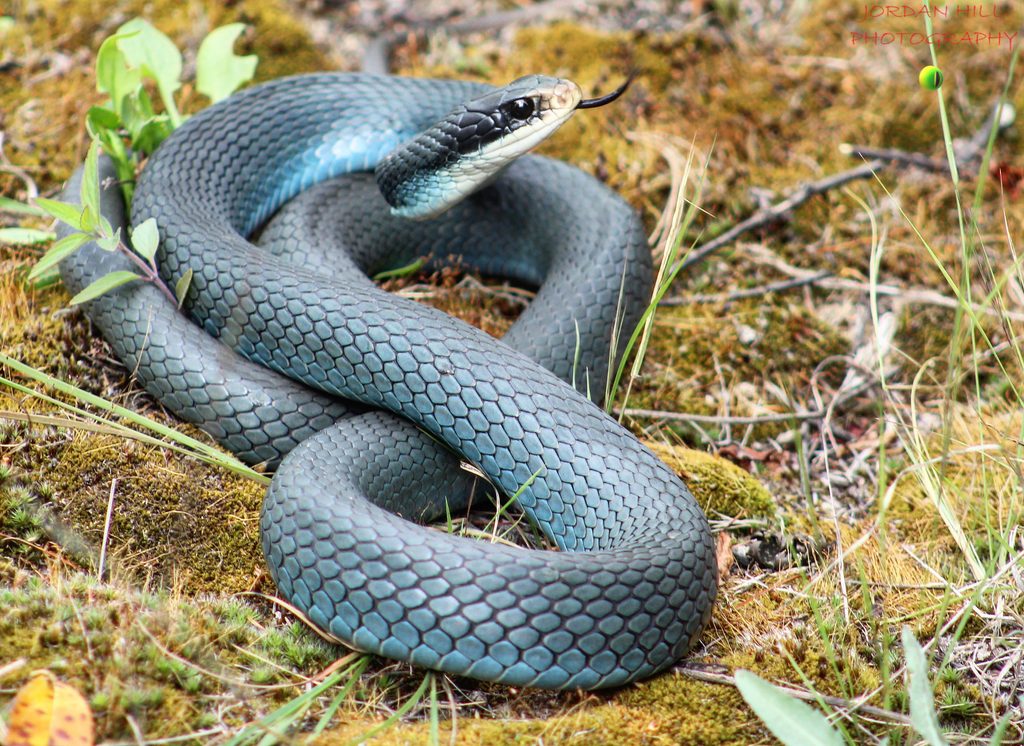
Blue Racer Snakes grow to three feet or more long.
Authors Note: I think the workers dug into a nest of Blue Racer snakes. They are common throughout Michigan and Wisconsin including the southern Upper Peninsula. Blue Racers commonly grow to lengths of three to six feet long. They are very fast and are non-venomous though they can act formidable.
For more information on Blue Racer Snakes, click here.
This is a rare photograph of the Fairy Arch. Most pictures of it left today are drawings.
One of the popular attractions on Mackinac Island is the Arch Rock. This beautiful limestone formation is seen by most visitors to the Island, but at one time, there was another limestone arch formation called the “Fairy Arch.”
The Fairy Arch was one of the Island’s must-see attractions and countless visitors would make the trek out to view it. It was located on the east side of the Island near Mission Point Resort and Robinson’s Folly. Though not as large as Arch Rock, it created a limestone tunnel that could be walked through creating a magical experience.
The Native Americans believed that giant fairies inhabited the east part of the island. The arches were how the fairies entered the Island. Fairy arch was for the fairy children while Arch Rock was where the adult giant fairies entered. They must have been really big fairies. Fairy Arch was one of the many breathtaking sites on Mackinac Island.
In the 1940s, the Fairy Arch was demolished. One source says it was destroyed for an environmental mitigation project while others say it was due to construction of a road to a private residence resulted in the arch being destroyed. It was a stupid shortsighted project in a place where roads aren’t really needed.
The Fairy Arch, unfortunately this did not survive into the modern day.
This article contains never before seen photos of the Zenith City taken at Sault Ste. Marie, Michigan. They are part of the Mikel B. Classen Collection of Historical Pictures.
The S.S. Zenith City slowly makes its way into the Soo Locks.
The Zenith City was a classic freighter ship of its day. It sailed throughout the Great Lakes for many years, and was the longest ship of its day at 387 ft. Launched in 1895 in Chicago, the Zenith City traveled throughout the Great Lakes hauling iron ore back and forth.
The ship sailed without mishap until July 26, 1910, when it ran aground at Au Sable Point in Lake Superior. There was a thick fog and it hit Au Sable’s sandstone reef about a mile offshore. Fortunately, there wasn’t much damage and she was pulled off the reef and was able to resume well enough to get the ship somewhere it could be repaired. Several bottom plates had to be replaced, but it was soon back on the water on its way.
The bow of the Zenith City at Sault Ste. Marie in 1910.
Six years later, the Zenith City sank. It was a storm near Hammond Bay in Lake Huron. There is very little information about the wreck other than it sank and was then recovered. The Zenith City sailed again.
It continued hauling ore until World War II. The Zenith City was sold to the U.S. War Shipping Administration along with six other ships in 1943. The Zenith City then spent its time taking supplies to the war effort in Europe. One year later the ship was laid up. It would remain there. It was sold for scrap in 1946. The Zenith City was no more. The only memories remain in pictures.
A closer look at the bridge on the Zenith City going through the Soo Locks.
The Norrie Mine was one of the prominent mines at Ironwood.
I received a few historical pictures from Ironwood. I wanted to pass them along as it has been difficult for me to find pictures from the west end of the Upper Peninsula. Above is the Norrie Mine. It was the first mine in Ironwood. Named after A. Lanfear Norrie, an explorer leading an expedition looking for iron, he found it. They sank a mine which was named after the discoverer and it became an extremely successful operation.
This old stereoview shows the view of Ironwood from the Norrie Mine.
Ironwood began as the camp for Norrie’s expedition. The foreman of the expedition was named Captain James Wood, nicknamed “Iron,” would receive the honor of the new settlement’s name, Ironwood. The town would soon prosper with mining operations springing up all around.
The view of Ironwood from the Ashland Mine. The city was growing quickly.
Ironwood grew fast. Looking closely at the photo above, several mine shafts can be seen on the horizon. The city is growing and the mines are running at full production. Almost all of the trees are gone. This was the beginning of what would be known as the Gogebic Iron Range. It would give life to communities all around, thriving off of iron mines. There were even attempts at gold and silver mining. Some did well with it while others did not.
This picture is titled “White Way” and shows downtown Ironwood at night in the early 1900s.
To this day Ironwood is a nice town to spend some time in. Much of it still has its turn of the century feel and remnants of its prosperous and historical past is represented all around.
Ironwood downtown today as the sun sets for evening.
Author’s Note: From the files of the odd, strange, and curious, this is a story that first appeared in Bloodstoppers and Bearwalkers by Richard M. Dorson. I thought it would be an ideal tale to repeat for the month of October. Captain Trudell and his crew of life savers built a reputation as one of the finest crews on the Great Lakes. Heroic rescues were their stock in trade.
A postcard of the Grand Marais Life Saving Crew under the leadership of Captain Benjamin Trudell.
Captain Benjamin Trudell was the Captain of the Grand Marais Life Saving Station. Having participated in many daring rescues, Trudell kept a secret through the years. Captain Trudell makes a confession, “If there is any event of importance happening, I dream about it in advance. I always have. My mother was the same way. She told me I would be gifted with unusual things. Anything important in my work, in my business, I dream of and when it happens the next morning, I remember it. It’s not exactly the same, you know, but the conditions are similar.
“During my second year in the Life Saving Service, in 1892, I was stationed at Deer Park (a ghost town east of Grand Marais). I was called to go on watch at 12 o’clock midnight, so I went to bed and slept from eight till twelve, and the dream happened at the very time a sinking was going on.
“I dreamed I met a man on the beach, coming towards me. He appeared to be an acquaintance, yet I was doubtful as he got nearer. He was very nicely, finely dressed. As I approached him, he held out his hand to shake hands, but his hand was cold and clammy, and I couldn’t hold the grasp. Then he turned and walked towards the water and dissolved into the surf.
” I was awakened standing in the middle of the dormitory, wet with perspiration. The relief watch was holding a lighted lantern up to my face. asking, ‘What is the matter?’
Next Day Tragedy
“That morning at the breakfast table, seven of us were messing together, and I recited the dream to them. They laughed at me, but I said, ‘Watch out.’ As the day wore on and nothing happened, they all began to make fun of me, even the Captain.
“It was blowing a three-day gale, with high seas from the north-west. About two o’clock that afternoon a man stumbled into the station, stating he had been on a wreck and had been washed ashore, the only survivor. Not knowing the direction of any town he followed along the beach until he arrived at Deer Park Life Saving Station. I was called to take the beach patrol west, and I was the first one ashore. There was the body of a man lying on his face, stretched out. He was finely dressed, and appeared to be an aristocrat. As we rolled him over, his hand flipped over and struck mine. And I saw he was the man of my dream. The resemblance was very noticeable. He had a mustache, but no chin whiskers. His clothes were not wet in the dream, though.
“He was Peter G. Minch, millionaire owner of the Western Reserve, the first steel ship to go down in the lakes.
Sinking of the Western Reserve
” The Western Reserve was the flagship of the Minch fleet of fourteen cargo vessels, a record-breaking three-hundred footer. On this trip Peter Minch was taking his family pleasure sailing from the Soo to Two Harbors, Minnesota, there to load up with ore. Proud in the strength of his ship, he sailed beyond Whitefish Point and Point Iroquois into the storm, against the advice of Captain Albert Meyers. The decks buckled before the gale, and about nine o’clock, the evening of April 30th, the steel freighter split in two. Passengers and crew scrambled into a metallic lifeboat and a yawl, and when the lifeboat capsized, all cambered into the yawl. A steamer passed to the west and the huddled group tried to burn a shawl as a signal, without success. The yawl coasted from this point, about twenty-five miles north of Grand Marais, until seven-twenty the following morning, when it overturned in the surf, some fifteen miles west of Deer Park and the Life Saving Station. All the occupants were drowned except the wheelman, Harry Stewart, who snatched a life preserver and made shore at Lonesome Point. It was Stewart, ( a cousin of Trudell) who lurched into the station bringing news of the wreck.
Want to know more about Piracy on the Great Lakes? This is a podcast I participated in recently for the Mathieu Project with Mathieu Itoney where we spend time digging into the background of Great Lakes Pirates. From the era of the fur trade through prohibition, pirates roamed the Great Lakes. They took advantage of anything they could find and were rarely caught. There were fur trade pirates, timber pirates, Mormon pirates, civil war pirates, brawling pirates, and prohibition pirates. These are True Tales of Freshwater Pirates! Check out the conversation.
The other Water Street drawing that shows the identical layout as the other picture.
When I collect early historical drawings, I always wonder how accurate of a depiction they are. Artistic license and all of that. I came across these two engravings that were unrelated to each other except that the subject matter is the same, Water Street in Sault Ste. Marie around 1850, before the locks were built. Even the flagpole that is prominent in one can be seen in the other towards the back with no flag. It is not often one gets the opportunity to compare images this old side by side.
If you compare both pictures, it can be seen that the buildings and their positions are identical. This assures me that this is an accurate representation of 1850s Sault. Looking closely, it can be seen that some of the buildings are identified including the Chippewa House and the Ste. Marie Hotel. The look and feel for life in the early Sault can be plainly seen through the figures in both pictures. These pictures are probably 1-2 years apart with slightly different perspectives. The rails running down the middle of the street were used for moving cargo from one ship to another, above to below the St. Mary’s Rapids and vice versa. The rapids blocked access to Lake Superior from the lower Great Lakes.
The Details are in the Drawing
Drawings like these were the photographs of the day and offer many of our only insights into what life and the world looked like before cameras. Widespread camera usage didn’t come into being until late 1850s. Often used for publications the drawings accuracy was important to help inform the public of distant places. Much of it spurred tourism to “See the world” during the Victorian era.
Not only are they accurate, but many are finely detailed revealing tidbits like building names and images of life before film. These early artists took pride on precision in their depictions painstakingly recreating every minute detail. In most cases, these early engravings are as credible as photographs. Their historical value is priceless.
Wabishkee Penas, the guide that led Lewis Cass and Henry Schoolcraft to the Ontonagon Boulder.
In 1820, Territorial Governor Lewis Cass went on an expedition through Lake Superior to the Mississippi River. The Michigan Territory at the time extended to the great river. Accompanied by Henry Schoolcraft and Douglass Houghton, the expedition had determined to discover the validity of the existence of the legendary Ontonagon Boulder, an object sacred to the Ojibwa.
When the Cass expedition arrived at the mouth of the Ontonagon River, they asked the local natives for a guide. The Cass expedition consisted of native guides and interpreters. One agreed to take them to the boulder. His name was Wabishkee Penas (White Pigeon) and he expertly navigated the rugged Ontonagon River for Cass and his men. Arriving at the boulder, Schoolcraft and Houghton were underwhelmed with the two-ton copper mass. They thought it would be bigger.
When they returned, Governor Cass gave Wabishkee Penas a silver medal for guiding them to the boulder. They then packed up and proceeded further with their explorations. When Wabishkee Penas returned to the tribe he was met with derision. He had done something unforgivable. He gave away the location of the great sacred boulder to outsiders. In a final insult, he was sent away, exiled, ostracized from his tribe, shunned by all.
Col. Thomas McKenney
Col. Thomas L. McKenny, Indian Agent in 1826.
Six years later he reappears at the door of Col. Thomas McKenney insisting on seeing Governor Cass. Cass and McKenney was attending a treaty signing in Fond du Lac, (at that time, Fond du Lac referred to the western part of Lake Superior) Minnesota and Mc Kenney was the current Indian agent. McKenny had set up offices in an old hut. Wabishkee Penas was emaciated and appeared to have spent most of his years hungry. Completely friendless, Wabishkee Penas sought the one person that might still greet him with a smile, Governor Cass. Around his neck still hung the silver medal.
Cass met with him. McKenney had his portrait painted. The resulting portrait is the first illustration above where his starvation and silver medal can be seen. McKenny would release a three-volume book called the “History of the Indian Tribes of North America.” Wabishkee Penas portrait as seen above was published within its pages. For better or for worse forever enshrined in history.
For more information on Thomas McKenney, Click here.
A rare photo of the Ropes Gold Mine near Negaunee. This was taken 1860s near its beginning.
Over the last couple of months, I’ve come across some really nice mining pictures. I thought I would post them up for everyone to check out. The picture above is of the Ropes Gold Mine which was located north of Negaunee and Ishpeming. The mine was established in 1881 by Julius Ropes and produced consistent quantities of gold until 1897. It was reopened for a few years in the 1980s. News of the Ropes opening prompted a gold rush to Ishpeming. Suddenly there was no less than 13 gold mines in the surrounding area all producing some gold and silver.
The Ohio Iron Mine
This is a picture of the crew of the Ohio Iron Mine near Michigamme.
The iron range of the Marquette region was full of iron mines. Dozens of them operated west of Marquette nearly the entire distance to L’Anse. The Ohio Mine was one of them and was west of Michigamme. It opened in 1907 and operated for 7 years. It produced low grade ore and wasn’t profitable. The picture shows the mining crew of the Ohio. No shortage of man power here. This has to be close to 1914 when the mine shut down. It was briefly reopened in the 1950s as an open pit mine by Cleveland Cliffs International (CCI).
New York Mine
This is the interior of the New York Iron Mine located near Ishpeming.
The New York Mine was a hematite operation. Beginning in 1864, the New York produced high grade hematite iron ore. Located in Ishpeming, it was part of the iron boom that fueled the entire region. It gave out in 1919. The New York lasted longer than many mining operations and provided the raw materials for the industrial revolution. The picture shows the interior of the New York Mine in its early days of 1870.
Lake Superior Iron Mine
A small iron mining operation. The location and name is unknown.
Iron mining was prevalent throughout the central and western Upper Peninsula. Small companies started up and then crashed as quickly while other companies flourished with the rich deposits iron. This picture shows one of those small operations. Labeled simply as “Lake Superior Iron Mining,” it is an unknown digging probably somewhere around Ishpeming or Negaunee. Though they are hard to see, there are four miners in the background of the photo. Piles of ore and the mine entrance can be clearly seen. Mining was rough, hard and dangerous work.
Victoria Copper Mine
Riding the Rock Skip. The mining company warned men against doing this and taking ladders instead, but it was a common practice anyway.
Victoria is a copper mining ghost town near Rockland. It can still be visited today. The Victoria Mine was notorious for its safety problems, injuries and death were common. The picture, “riding the skip cart,” shows one of the miners going down into the shaft doing something that was against company rules. It was simply quicker and a couple of fatalities resulted from this. Victoria mine operated for nearly 50 years and was a solid copper producer.
Chief Satago and his wife. He is said to have been 108 years old.
Author’s note: The headline above says it all. I found this obituary in a 1911 copy of the Detroit Free Press. I was fascinated by the writeup of his life. I’ve reprinted this in its entirety.
St. Ignace, Mich., Sept. 28 – With the death of Chief Satago, passed away the most noted and historic personage in northern Michigan. From Chief Satago the poet Longfellow gleaned much material for “Hiawatha.” In the lodge of Chief Satago the poet spent much of his time more than a half century ago when in this north country in search of material.
Satago was a devout Roman Catholic, his ancestors being converted by Father Marquette. The most cherished event of his life was the fact that he was present when the remains of the great missionary and discoverer were disinterred from the ruins of the old mission church by Father Jacker. From his chieftain father he often heard of the wonderful cortege of 30 canoes that bore Marquette’s body up Lake Michigan to the mission here.
Author’s Note: About the last paragraph above, It says that Satago was 108 years old in 1911. That makes his birth year 1803. Father Marquette’s bones were returned to St. Ignace in 1677. It was impossible that Satago was an actual witness to this as the obituary implies.
Piracy on the Great Lakes: True Tales of Freshwater Pirates
For over forty years, writer and photographer Mikel Classen has immersed himself in the rich history and culture of Northern Michigan’s Upper Peninsula (UP). His latest work, Piracy on the Great Lakes: True Tales of Freshwater Pirates, uncovers the fascinating and lesser-known stories of pirates who sailed the vast freshwater seas of the Great Lakes. In this article, we dive into the unique maritime history of the region, explore some notorious pirates, and uncover how piracy shaped this rugged frontier.
You can listen to the interview by clicking on the triangle below
The Unique History and Culture of the Great Lakes Region
Because of the nature of the Great Lakes, a culture was created through the mix of Native Americans, French trappers, miners, loggers, and maritime sailors that can be found nowhere else. Like many places, the Michigan frontier was rough and lawless. It was a perfect mix for piracy to flourish.
Living in the UP, one quickly realizes how deeply rooted this history is, but few realize that piracy was also part of this story. It is a mysterious part of our past, shrouded in secrecy as a pirate’s deeds were those that could get a man hung. Renegade sailors and captains preying on ships and settlements across the lakes were not uncommon.
Freshwater Pirates: Who Were They?
Contrary to the romanticized image of Caribbean pirates in flamboyant costumes, Great Lakes pirates were practical and ruthless, wearing wool and flannel. They were often ordinary men who turned to crime—stealing cargo, raiding ships, and resorting to violence to maintain silence. No witnesses are the best witnesses.
The USS Michigan in its early days of patrolling the Great Lakes.
The USS Michigan was the only law enforcement vessel patrolling the entire Great Lakes region, pirates had plenty of opportunities to strike when it was out of sight. With thousands of miles of waterway to patrol, The USS Michigan had a bigger job than it could handle. Pirates exploited this gap by stealing goods from docks or ships and quickly reselling them at different ports, making piracy a lucrative and low-risk venture during the 19th century.
Notable Pirates and Piracy Stories of the Great Lakes
Dan Seavey: The Escanaba Pirate
Dan Seavey, the Lake Michigan pirate relaxes and poses for a picture after his trial in Chicago.
“Roaring” Dan Seavey stands out as one of the most notorious pirates in Great Lakes history. Originally from Maine, he migrated westward and found the Great Lakes region a perfect place for his illicit activities due to its rugged, lawless frontier. Seavey led a fleet of schooners, raiding ships and shore settlements. He poached and smuggled venison along with women for brothels.
James Jesse Strang and the Beaver Island Pirates
James Jesse Strang was a unique figure—a Mormon leader who declared himself king of his followers on Beaver Island. Strang and his band of pirates, often polygamous and enforcing strict religious laws, raided settlements across northern Lake Michigan, claiming the islands as their own territory. Their tactics included stealing livestock, ships, and supplies, often intimidating locals with public punishments for dissenters.
Strang’s reign ended violently when he was assassinated by his own followers, after which non-Mormon residents banded together to expel the Mormons from the island in what became known as one of the darkest episodes in Michigan history.
The Apostle Islands Pirates
Another intriguing tale comes from the Apostle Islands near Bayfield, Wisconsin. A group of pirates named themselves after the apostles—Mark, Luke, and John—with a leader called “Chief.” They operated during the fur trade era, raiding French shipments and even robbing payrolls. It is told that the Apostle Islands received their name from the Apostle pirates. Piracy during the fur trade years was rampant with wars between the fur trade companies resulted in massacres.
Bully Hayes: From the Great Lakes to the South Seas
The cover for one of the “Bully” Hayes novels about the pirate that began in the Great Lakes.
Bully Hayes began his pirate career on Lake Erie but eventually sailed to the South Seas, where he became a legendary figure featured in dime novels and pulp fiction. While his exploits in the Great Lakes were typical raiding and theft, his South Seas adventures elevated his notoriety far beyond the freshwater seas.
Wreckers, Timber Pirates, and Prohibition-Era Smugglers
Piracy on the Great Lakes wasn’t limited to raiding ships. “Wreckers” deliberately caused shipwrecks by manipulating lighthouse signals or using fake lights to lure vessels onto rocks, then looted the wreckage. Both James Strang’s followers and Dan Seavey employed these tactics, especially in treacherous areas like the Beaver Islands.
Timber piracy was another major problem in the 1800s, with pirates stealing logs and lumber from federal lands. Interestingly, many settlers supported these pirates because they wanted the forests cleared to make way for farming. This led to the “Timber Rebellion” of 1853, where pirates even rammed the USS Michigan in defiance of federal law enforcement.
During Prohibition, piracy took on a new form with bootleggers smuggling vast quantities of alcohol across the Detroit River. One infamous figure known as the “Gray Ghost” wore gray clothing and a mask, running booze between Detroit and Windsor. The sheer volume of alcohol moved—valued at over $200 million in one year along just one stretch of water—made this era a golden age for Great Lakes piracy.
The Legacy and Mysteries of Great Lakes Piracy
A wanted poster for the Great Lakes Pirates
Most Great Lakes pirates were motivated by profit rather than treasure, stealing commodities rather than gold or jewels. However, legends of lost treasures persist, such as the rumored Civil War gold lost near Poverty Island in Lake Michigan and possible hidden riches left behind when the Mormons were expelled from Beaver Island.
These tales, along with the rugged and often brutal reality of piracy on the freshwater seas, paint a vivid picture of a frontier region where lawlessness and survival intertwined. The stories of these freshwater pirates remind us that piracy was not just a Caribbean phenomenon but a part of the American heartland’s history as well.
Continuing the Exploration of Upper Peninsula History
Mikel Classen continues to explore the rich and sometimes dark history of Michigan’s Upper Peninsula through his writing. His upcoming works promise to uncover more wild and surprising stories from this rugged and fascinating region. Keep following for more.
Listen to the full podcast interview of Mikel B. Classen on Emma Palova’s show “For the Love of Books” by clicking on the play button the bar below
Join us as we dive into the fascinating world of piracy on the Great Lakes, a topic often overshadowed by the more notorious Caribbean pirates. In this blog, we explore the stories of lesser-known pirates, their exploits, and the rich history that surrounds them, as shared by author Mikel B. Classen.
Introduction to the Podcast
Welcome to our exploration of the captivating tales of piracy on the Great Lakes. In this podcast, we are privileged to delve into the world of lesser-known maritime adventures, blending history with storytelling. Our discussions focus on the unique narratives that shaped the Great Lakes, highlighting the contributions of local authors and historians.
Meet Mikel Classen
Mikel Classen is not just an author; he is a storyteller who breathes life into the history of Northern Michigan. With over forty years of experience in journalism, he has dedicated his career to uncovering the hidden stories of the region. His passion for the past is evident in his writing and photography, capturing the essence of Michigan’s North Country.
As the founder of the UP Reader and a board member of the Upper Peninsula Publishers and Authors Association, Mikel champions local literature. His extensive research into the Great Lakes’ piracy reveals a world that many have overlooked. His insights offer a fresh perspective on this intriguing subject.
The First Day of Spring
Spring is a time of renewal and awakening, even in the chilly climates of Northern Michigan. As the snow begins to melt, the landscape transforms, revealing the vibrant life that lies beneath. This season symbolizes hope and new beginnings, much like the stories of piracy we’re about to explore.
On this first day of spring, we reflect on the resilience of those who lived along the Great Lakes. Their tales of adventure and survival continue to inspire us, reminding us that history is not just about dates and events, but the lives that were lived in between.
Review of ‘Piracy on the Great Lakes’
In ‘Piracy on the Great Lakes‘, Mikel Classen invites readers into a world filled with daring exploits and rich narratives. The book is not only informative but also engaging, filled with rare period photographs and engravings that bring the stories to life. Sue Harrison, an international bestselling historical novelist, praises the fast-paced narrative that captures the essence of these unique pirates.
“This book serves as a gateway into a lesser-known history, filled with tales of treasure and adventure that rival those of Caribbean pirates. Classen’s meticulous research ensures that each story is grounded in fact, allowing readers to immerse themselves in the world of Great Lakes piracy.” – Sue Harrison.
Overview of Great Lakes Piracy
The final cover for my new book, Piracy on the Great Lakes – True Tales of Freshwater Pirates.
The Great Lakes were once a bustling hub of trade and commerce, attracting not only merchants but also pirates. Unlike their Caribbean counterparts, Great Lakes pirates targeted cargo ships laden with valuable goods such as furs, timber, and grain. The competition for these resources often led to violent confrontations on the water.
These pirates were not just random outlaws; they were often connected to the very industries that thrived in the region. Their motivations were complex, driven by economic necessity and the allure of wealth. The stories of these pirates reveal a fascinating intersection of history, culture, and survival.
The Fur Trade and Early Pirates
The fur trade was a driving force behind early piracy on the Great Lakes. Companies like the Northwest Fur Company and the Hudson Bay Company engaged in fierce competition, leading to conflicts that would spill over into piracy. The riches of the fur trade made it a target for those willing to risk everything for a chance at wealth.
Voyageurs, the skilled canoeists of the fur trade, often found themselves caught in the crossfire. These men were not just transporting goods; they were navigating a treacherous landscape filled with rival companies and opportunistic pirates. The allure of furs, often referred to as “gold,” fueled many of these pirate ventures.
The Apostle Pirates
Among the most intriguing stories is that of the Apostle Pirates, who operated out of the Apostle Islands during the fur trade era. This group was notorious for their daring raids on French canoes and military payrolls. Their audacity and cunning made them legends in their own right.
Interestingly, these pirates adopted biblical names, calling themselves the Apostles. Their leader, simply known as “the chief,” almost chose a more divine name. This unique blend of piracy and religious symbolism adds a layer of complexity to their story, illustrating the multifaceted nature of these individuals.
Geography of the Apostle Islands
The Apostle Islands are not just a picturesque destination; they were a strategic haven for pirates. Nestled in Lake Superior, these islands provided natural cover and refuge for those looking to evade capture. Their rugged terrain and hidden coves made them ideal for launching surprise attacks.
Today, the Apostle Islands remain a popular destination for outdoor enthusiasts and history buffs alike. Their beauty is matched only by the stories they hold, reminding us of a time when the waters were filled with both adventure and danger.
Comparison with Caribbean Pirates
While Caribbean pirates are often romanticized in popular culture, Great Lakes pirates present a different narrative. Caribbean piracy revolved around treasure ships laden with gold and silver, whereas Great Lakes piracy was focused on trade goods essential for survival and commerce.
Great Lakes pirates operated in a world defined by competition and local economies. Their actions were closely tied to the fur trade and other industries, reflecting the socio-economic realities of their time. This distinction highlights the diverse nature of piracy and the various factors that drove individuals to piracy across different regions.
Discovery of the Freshwater Pirate Idea
The journey into the world of freshwater piracy began serendipitously. While conducting historical research in Marquette, I stumbled upon a folder labeled “Legends.” Such a title piqued my curiosity, prompting me to dive deeper into its contents. Within those pages, I found the captivating story of Dan Seavey, a pirate who operated out of Escanaba.
This discovery ignited a passion within me to explore the tales of Great Lakes piracy. Initially published in the 1980s, my work on Seavey laid the groundwork for a broader investigation into this largely overlooked chapter of history. As I delved deeper, I realized that Seavey was just one of many intriguing figures in the Great Lakes’ maritime lore.
The Story of Dan Seavey
Dan Seavey’s tale is one of both charm and chaos. Known as the most famous Great Lakes pirate, his exploits are a blend of audacity and mischief. Seavey was notorious for his cunning, often outsmarting authorities and rival pirates alike.
His most infamous act involved the ship Nellie Johnson, from which he allegedly threw the crew overboard. This dramatic event culminated in a piracy trial—the only one of its kind on the Great Lakes. The absence of witnesses allowed him to escape conviction, a testament to his cleverness and the chaotic nature of maritime law at the time.
Seavey’s life was a mix of piracy and legitimate ventures, including running a sawmill. His dual existence illustrates the blurred lines between legality and outlawry in the turbulent waters of the Great Lakes.
Michigan Historical Society Presentation
My presentation at the Michigan Historical Society was a pivotal moment in my exploration of Great Lakes piracy. The audience’s enthusiasm was palpable, with standing room only, indicating a deep-seated interest in this obscure topic.
During the presentation, I shared not only Seavey’s story but also touched on other pirates who roamed these waters. This engagement reinforced the idea that many people are unaware of the rich tapestry of piracy in their own backyard.
The reception was encouraging, pushing me to further expand my research and ultimately leading to the publication of my book on the subject. The presentation served as a rallying point, connecting a community eager to learn about their maritime history.
The Mormon King: James Jesse Strang
James Jesse Strang, often referred to as the Mormon King, presents a fascinating figure in the annals of Great Lakes piracy. Strang claimed divine authority, asserting that the islands in the Great Lakes were rightfully for the Mormons. His self-proclaimed kingship led to the formation of a pirate fleet, as he believed they were entitled to seize resources from the surrounding areas.
Strang’s followers were loyal and fervently believed in his vision. They raided islands, commandeering livestock and supplies, operating under the misguided notion that they were fulfilling a divine mandate. This blend of religious zeal and piracy adds an intriguing layer to the narrative of Great Lakes piracy.
Research Process for the Book
The research process for the book was extensive and multifaceted. I spent significant time at the Delta County Historical Society, uncovering hidden gems of information about Seavey and his contemporaries. Additionally, my personal library, filled with out-of-print history books, proved invaluable.
In one particularly fruitful find, I discovered a photograph of Seavey with his daughter, a rare glimpse into his personal life. This image and many others enriched the narrative, allowing readers to connect with the human side of these pirates.
Each piece of information I gathered contributed to a fuller understanding of the socio-economic conditions that fostered piracy. It was a labor of love, as each discovery brought me closer to the truth behind these captivating characters.
The Life of Dan Seavey
Dan Seavey was a man of contradictions. He was known for his generosity, famously offering his shirt to those in need, only to pilfer it back at the first opportunity. This duality made him a complex figure, embodying both the charm and chaos of piracy.
Seavey’s life was not solely marked by his illegal activities; he also served as a U.S. Marshal. His time in law enforcement, however, was marked by misadventures that often led him back to his pirate roots. His notorious reputation for drinking and brawling became part of his legend.
One memorable incident involved a drunken brawl where he famously used a piano as a weapon, leading to unintended consequences. Such stories illustrate the tumultuous nature of his life and the fine line between law and lawlessness on the Great Lakes.
Dual Nature of Pirates
Great Lakes pirates often embodied a dual nature, balancing between villainy and community service. Many were deeply intertwined with local economies, making their actions more complex than mere criminality. Their motivations were often rooted in survival, driven by economic pressures and the allure of wealth.
This duality challenges the traditional notions of piracy. They were not always the ruthless criminals depicted in popular culture; instead, they were individuals navigating a precarious existence. This complexity adds depth to their stories, revealing the human side of piracy.
The Gray Ghost Rum Runner
Among the most intriguing figures in this narrative is the Gray Ghost, a mysterious rum runner during Prohibition. Operating out of Detroit, he was known for his stealth, often navigating the foggy waters in a boat painted gray to avoid detection.
The Gray Ghost played a crucial role in smuggling operations, taking advantage of Canada’s lack of prohibition laws. His operations highlight the bustling underground economy that thrived during this time, with a staggering $212 million worth of alcohol crossing the Canadian border in just one year.
This figure exemplifies the cunning and resourcefulness of those engaged in smuggling, illustrating how piracy evolved in the context of changing laws and societal norms.
The Scale of Smuggling During Prohibition
The scale of smuggling during Prohibition was staggering, transforming the Great Lakes into a hotbed of illegal activity. The lucrative trade in alcohol brought together various players, from organized crime syndicates to independent smugglers like the Gray Ghost.
Detroit became a central hub for these operations, with boats transporting money for liquor across the border. The sheer volume of alcohol being smuggled underscores the desperation and demand for illicit goods during this era.
The Great Lakes, with their vast network of waterways, allowed for a fluid exchange of goods, making it an ideal setting for smuggling operations. This intricate web of commerce paints a vivid picture of the underbelly of society during one of the most controversial periods in American history.
Recurring Themes of Piracy
The exploration of piracy on the Great Lakes reveals several recurring themes that echo through the ages. One prominent theme is the constant struggle for survival. Pirates often operated in desperate conditions, driven by the need for resources. This need transformed them into opportunists in a world where legal enforcement was minimal.
Another recurring theme is the blurred line between legality and illegality. Many pirates were once legitimate traders who turned to piracy out of necessity. Their actions, while illegal, often stemmed from a complex interplay of economic pressures and moral ambiguity.
Additionally, the theme of community plays a crucial role. Pirates were often part of local economies, and their exploits impacted the communities around them. This duality creates a rich tapestry of stories that challenge our perceptions of piracy.
Unique Research Findings
In my research, I uncovered fascinating details that challenge conventional narratives about piracy. For instance, the Great Lakes were not just a backdrop for piracy; they were a thriving ecosystem where piracy was interwoven with local economies.
Many pirates had deep ties to their communities, often sharing resources and information. This interconnectedness complicates the idea of the lone pirate, revealing a network of relationships that facilitated their activities.
Moreover, the lack of effective law enforcement until the establishment of the Coast Guard allowed piracy to flourish. The USS Michigan, the sole law enforcement vessel, could only cover so much territory, leaving vast areas vulnerable to piracy.
Common Misconceptions in Pirate History
Many misconceptions surround the history of piracy, particularly concerning the Great Lakes. One prevalent myth is that piracy was solely a male-dominated activity. In reality, women played significant roles, both as pirates and as essential figures in supporting their operations.
Another common misconception is that piracy was always violent and chaotic. While there were certainly brutal encounters, many pirates operated with a level of strategy and negotiation. They often preferred to avoid bloodshed, recognizing that alive crews were more valuable than corpses.
Additionally, the notion that all pirates were after gold and treasure is misleading. Great Lakes pirates focused on trade goods, such as furs and timber, essential for survival. This shift in focus provides a deeper understanding of their motivations and actions.
Future Writing Projects
Looking ahead, I am excited about my upcoming projects. The next book in the Yooper History Hunter series will delve into Grand Island, rich in history and adventure. This guide aims to inspire readers to explore lesser-known historical sites.
I plan to incorporate more stories of local figures who shaped the region’s history, including pirates. By shedding light on these characters, I hope to encourage a deeper appreciation for our maritime heritage.
Additionally, I am considering a project that addresses common myths about the Great Lakes and their histories. This initiative will aim to educate the public and provide a more nuanced understanding of the area.
A Reading from ‘Piracy on the Great Lakes’
As I delve into the first chapter of ‘Piracy on the Great Lakes,’ I want to emphasize the distinct nature of piracy in this region. Unlike the romanticized depictions of Caribbean pirates, Great Lakes piracy was rooted in the pursuit of practical commodities.
These pirates were often hidden in the shadows, waiting for the right moment to strike. They would lure unsuspecting vessels into treacherous waters, ready to seize cargo and disappear into the night. This atmospheric tension is what makes their stories so captivating.
Through this reading, I aim to transport listeners into that world, where danger lurked behind every wave and the stakes were incredibly high. The stories of these pirates are not only thrilling but also serve as a reminder of the complexities of human nature.
Closing Thoughts
As we wrap up this exploration of Piracy on the Great Lakes, I invite you to reflect on the stories shared. These narratives are not just tales of adventure; they are windows into the past, revealing the complexities of human behavior and societal dynamics.
Remember, history is a living entity, shaped by the stories we tell and the lessons we learn. I encourage you to seek out these stories in your own communities and engage with the past.
Thank you for joining me on this journey. Keep exploring, keep questioning, and always be curious about the history that surrounds you!
Blows Up While On Convoy Duty! The Coast Guard cutter Escanaba, shown here in Lake Michigan while she was on duty in those waters, sank after an explosion ripped her amidships while on convoy duty in the Atlantic, the navy announced in Washington Friday. 6/19/1943
I recently received the picture with the caption printed above about the Coast Guard Cutter Escanaba. After doing some research I found the story to be one of the lingering mysteries of World War II, the strange fate of the USS Escanaba.
There are countless stories of the bravery and daring of those in the U.S. Coast Guard. Their basic mission is to protect the boundary waters of the United States. Occasionally they get called away from that specific duty when the need presents itself. World War II was just such a time. The USS Escanaba was just such a ship.
Lake Michigan and World War II
The USS Escanaba spent most of its time patrolling the waters of Lake Michigan. It was built in Bay City by the Defoe Shipbuilding company. The Escanaba was intended for ice breaking, law enforcement, and maritime search and rescue. Its home port was Grand Haven, Michigan. At the time, Escanaba was one of the busiest ports on Lake Michigan and the ship was named in honor of that city. The Escanaba performed several rescues of ship’s crews in distress on Lake Michigan.
USS Escanaba ice breaking on Lake Michigan before WWII.
During World War II, convoys of ships carrying supplies and ammunition crossed the Atlantic regularly. Many ships were ordered to protect these convoys at all costs. The USS Escanaba was called out of the Great Lakes to accompany and protect the ships of the supply convoys.
During this time, the Germans were filling the waters of the Atlantic with what were known as the “Wolfpacks,” groups of submarines that were attacking and sinking most ships they came across that weren’t allied with the Nazis. They had no discretion whether they were civilian ships or military. They sank them both. The wolfpacks fed on convoys.
Greenland Patrol and the USS Dorchester
The USS Escanaba was assigned to what was known as the Greenland Patrol. They would escort convoy headed through the North Atlantic. The cutter had been refitted with weaponry in Boston, such as depth charges for combatting the U-2 submarines. The Escanaba claimed to have sunk 3 subs during its time on escort.
This painting by Robert Lavin depicts the Escanaba rescuing the survivors of the USS Dorchester.
Coast Guard ships are known for their daring rescues and the USS Escanaba did its part. In February of 1943, they rescued the survivors from the USS Dorchester. The Dorchester was the victim of a submarine torpedo and sank in the icy February water. Many of the survivors were so cold that they couldn’t hang onto ropes or pull themselves up a ladder. Members of the crew of the Escanaba became for the first time, rescue swimmers who went into the water themselves to pull survivors onboard! It is the first documented use of “rescue swimmers.” They wore special survival suits and tied debilitated victims to ropes to be pulled aboard. They rescued 133 people that day. Out of the 50 they initially thought were dead, only 12 died. The others revived when they got warm.
Many of them were awarded medals for their actions and the rubber suit retrieval method invented by one of the Escanaba’s crew members, Lt. Robert Prause Jr. gained praise and the method earned a permanent place in cold water rescues.
USS Escanaba Mystery
Unfortunately, on June 10th, that same year, the USS Escanaba was blown to pieces. The ship was escorting another convoy in the North Atlantic when it suddenly burst into a ball of fire. It happened so fast, that they bever got off a distress signal. In a moment, the ship and crew were gone. Other ships in the convoy that saw it said that there was no sound. First ships arrived on the scene within 10 minutes. Only two survivors were found and one dead, the aforementioned Lt. Prause Jr. (It could be said that Lt. Prause posthumously went on to save countless lives with his cold-water suit invention.) The only reason the two survived is that their clothing had frozen to floating debris and prevented them from sinking to the bottom like the rest of their crew mates. 13 officers and 92 crewmen died that day.
Some of the crewmen from the USS Escanaba near the time of the explosion. Heroes all.
Theories
No one knows what caused the USS Escanaba to explode. Naturally, the predominant theory is that it was a victim of a German submarine. But, none were found in the area and torpedo explosions make a lot of noise. Another theory is that it hit an underwater mine. Thousands of these were used in World War II. The last theory is that something went wrong with the ship itself. The possibility that something happened on board that caused an accident could have happened since they had different kinds of explosives aboard such as depth charges.
Whatever happened, it remains a mystery and probably always will. The 105 heroes that went down with the Escanaba will always be remembered for their valiant efforts to help people and save lives.
The cover art for the novel the Alexandria Code, an Isabella Carter Mystery, by Mikel B. Classen, now available.
Alexandria Code Review from Reader Views
Most of my readers know me from my books of non-fiction. Occasionally I step away from that and put something together just for fun. My book Lake Superior Tales is like that, U.P. tall tales. A couple of years ago I put together a novel of action and adventure that I felt was something I would like to read. The Alexandria Code is that book. Now, much to my gratification, my book the Alexandria Code, has just received another 5-star review from the book site, Reader Views.
The Review
5-Star Review
“The Alexandria Code,” part of the Isabella Carter Adventure series by Mikel B. Classen, is a thrilling blend of suspense, action, and archaeological intrigue. In this gripping adventure, archaeologist Dr. Isabella Carter finds herself embroiled in a dangerous quest following the discovery of ancient mysterious quartz stones. Unfortunately, her nemesis Lazarus Fane stokes her interest by bringing her one to investigate. He is a ruthless black market antiquities dealer who has previously brought nothing but pain to Isabella.
Similar quartz stones were discovered by diver Aiden McKenzie. Isabella joins him to go on the hunt for them after they have been stolen. These ancient artifacts, seemingly too perfect for natural formation, hint at a long-lost code created by an advanced civilization. This sets the stage for an exciting exploration of history, morality, and survival.
Classen quickly draws readers into a tale that involves high stakes and shadowy dealings. Lazarus Fane adds a palpable tension to the plot. His manipulation of Isabella into researching the quartz moves the story forward. As it does, it reveals a complex web of deceit and violence. As Isabella and her team, which includes grad students and old allies, delve deeper into this mystery, they become targets themselves. This adds layers of suspense which makes it impossible to put this thriller down!
I found the character development in “The Alexandria Code” to be particularly noteworthy. Isabella is portrayed as a strong, multifaceted protagonist who is haunted by her past. This past is intertwined with Fane’s dark history and the tragic loss of valued colleagues and people from an indigenous tribe. In addition to the darkness, Isabella also has some extraordinary experiences that leave her with special gifts. The backstory not only enriches her character but also adds depth to the narrative. The supporting characters are also well-crafted and have significant contributions to the unfolding drama.
Classen also excels in creating vivid settings that transport readers from places like Michigan and New York to the Florida Everglades. The protagonist also relives a part of her past that took place in a South American jungle. These places are incredibly described and, in many cases, offer very unique settings, such as when she is exploring a secret ancient temple. These locales enhance the sense of adventure and discovery. The pacing is relentless. Readers will find that the narrative remains pulse pounding and engaging through the whole adventure.
“The Alexandria Code” by Mikel B. Classen is an intense action-adventure that also raises questions about knowledge, ethics, and the responsibilities that come with discovery. Isabella Carter’s journey is one of empowerment and resilience. This novel is a must-read for fans of archaeology, and suspense. I look forward to reading more adventures in this series.” Reviewed by Paige Lovitt for Reader Views.
This is a bird’s eye view of Calumet during its heyday.
A Capitol Decision
During the Year, I make quite a few personal appearances at events. I enjoy talking to people and I’m often asked historical questions. Over the years many erroneous stories about the Upper Peninsula have circulated and somehow stuck becoming U.P. myths. One of these stories I hear frequently, is that Calumet was once considered for Michigan’s Capitol. It was not.
In 1847, when the capitol was designated in Lansing, the village that would become Calumet, Red Jacket, didn’t exist yet. The capitol was moved from Detroit because of a fear of military capture. Detroit, the current capitol, was taken by the British in the war of 1812. Some feared it could happen again.
Since Detroit laid on the border of Canada, it was decided that maybe a more central location in the state was advisable. Also growing settlements on the west side of Michigan was pushing for a closer location. Candidates were Ann Arbor, Grand Rapids, Marshall, and Jackson. Lansing was picked because it was central to all of them, the Lansing area was nearly uninhabited at the time. So was the Upper Peninsula except for the Native Americans.
Calumet Wasn’t Born Yet
A couple from Red Jacket taken in the late 1800s.
Mineral rights were achieved in the U.P. with a treaty in 1843 with central and western Upper Peninsula Native Americans for mineral rights within those regions. This heralded the beginning of the copper boom.
Founded on the rising tide of copper mining, the city that would become Calumet, Red Jacket, became officially a town in 1864, almost 20 years after the capitol was chosen. It’s twin city Laurium, was originally called Calumet. Confusing I know. It became Laurium in 1895, and Red Jacket became Calumet in 1929. Though copper was being unearthed in the Keweenaw, its production was hindered until 1855 when the Soo Locks were opened. Settlements across the peninsula were few and far between until the 1850s. Again, all taking place after the capitol was moved to Lansing. At that time Calumet was but a glimmer in history’s eye.
The Alex McDougall whaleback ship encased in ice with the crew frozen inside.
A whaleback ship is an early ore freighter that sailed throughout the Great Lakes. The one pictured, the Alexander McDougall, is shown docked at Sault Ste. Marie, MI after a terrifying ordeal. It was the largest whaleback built in 1898 and was 418 feet long. The ship was lost for three days sailing through a brutal Lake Superior storm.
When docked at the Soo, she was coated with 20 inches of ice and axes were used to free the captain and the wheelsman from the pilot house. They had remained at their stations unwavering during the storm. The dining room and stateroom were at the rear of the ship and the ice coating and the heavy rolling seas made it impossible to reach. Over time they became prisoners of the ice. During the three days the captain and the wheelman had no sleep or food. It was a miracle they made it with all credit going to the captain and his wheelman for saving the ship, cargo, and crew.
Earlier this month, my publisher, Modern History Press, published my newest book Piracy on the Great Lakes: True Tales of Freshwater Pirates. The book focuses on several known pirates of the Great Lakes. We were able to find pictures for some of them and used them in the book.
In the spirit of having a little fun with the subject, my publisher and I got together and came up with this “Wanted” poster for some of the Great Lakes Pirates. We decided to print a few and make them available to whoever thinks they’re cool. One is going into my office.
These will only be available here on the website or at my in-person events. I will be scheduling my events right after the new year. The cost of the poster is $5.00. Obviously, we don’t intend to retire soon from this. Get this exclusive companion to the Piracy on the Great Lakes book while they last. To order this poster click here.
I thought it might be fun to look back at some of the fashions of days gone by as represented by historical photos of the fashionable ladies of the Victorian era.
These unknown ladies are decked out for their picture. This one is from Crystal Falls.
These ladies look like they found their best hats for this photo session. This unknown group of women were from Crystal Falls. From the hairstyles to the ruffled dresses, This picture is great fun.
A picture from Menominee unknown woman with 1890s winter coat and muffler.
This woman from Menominee is dressed for the winter cold. Her fur lined coat and muffler say she’s ready for some outdoor fun. That muffler could hold a clandestine bottle of brandy well concealed.
Several ladies of the 1890s relax on a porch on Mackinac Island.
On Mackinac Island everyone dresses their best no matter what time of day. These Victorian ladies relax on a porch enjoying the Lake Huron breeze. We all know life on the island is easy and they seem to be making the most of it.
An unknown Ojibwa Princess in beautiful hand-made clothing.
This picture was taken from a stereoview and was labeled Ojibwa Princess at Sault Ste. Marie, Michigan. Unfortunately, no name was attached to the picture. I wish the picture had a little more detail of the intricate beadwork on the shoulders. A truly wonderful example of Native American fashion capturing the traditional dress of Ojibwa culture, her leather and bead finery shows the love and care that went into that dress.
This little girl from Sault Ste. Marie shows children weren’t immune to the Victorian dress either.
This little girl has the look that means business. She does not look like she and getting pictures taken agree. Maybe that lace collar is a little tight. She looks like she could hold her own in a bar fight.
The Lypsinmaas sisters pose from Red Jacket showing the fashions from the Keweenaw.
From the Keweenaw we get the Lypsinmaas sisters. This is the hot look from the Keweenaw but admittedly, the fingerless gloves say things are pretty cool. The woman on the right looks like she’s headed for Roswell, NM for a UFO convention with that hat. The one in the middle looks like she’s auditioning for a George Romero movie.
The final cover for my new book, Piracy on the Great Lakes – True Tales of Freshwater Pirates.
I’ve been very anxious for this book to come out. This seems to be a subject very few people seem to know about. Ever since I discovered Dan Seavey, the Escanaba pirate, (some of his story is in True Tales) I’ve been working to discover more of these rogues that plagued the waters of the Great Lakes. I found several more and realized piracy was much more prevalent on the lakes than I thought.
Of course, much of the piracy, we don’t know since the very nature of piracy is to not be discovered. As I say in the book, “No witnesses are the best witnesses.” But the ones I found were amazing characters, rough and tumble, ruthless and cunning. This is not a long book, 74 pages, but it is packed with historical tales of the freshwater pirates. I’m very pleased with this book and I hope everyone else will enjoy it as well. Aye, keep a weather eye out. There be pirates about.
The link below is to a podcast I did with MLive on Great Lakes Piracy. It begins with a brief introduction at the Boyne City Pirate Festival. I’m interviewed following that. It was a fun talk.
Waiting in the night, hidden behind a remote island, no lights showing, pirates would lure unsuspecting ships into unknown waters. Then they would silently slide up to them and board the ship. The crew would be killed and the bodies thrown over the side, weighted down with chains. The pirates would take the cargo, sink or burn the ship, and then, just as quietly, sail away into the night. Dead men tell no tales, nor do they testify in court.
Forget everything you’ve learned about pirates from Johnny Depp films. Instead of chasing down ships laden with gold, the Great Lakes pirates were after commodities. There were fur pirates, timber pirates, religious pirates, and inept pirates. Just about anything that could be sold fell prey to pirates. Cargos could be stolen and then sold at the next port. On the Great Lakes, piracy was easy.
Reviews for Piracy on the Great Lakes, True Tales of Freshwater Pirates
“Loaded with rare period photos and engravings of the infamous pirates who wreaked havoc in Great Lakes waters and shore communities, Classen’s inviting narrative is fast-paced and filled with legends of treasures and daring exploits.” -Sue Harrison, international best-selling historical novelist
“Piracy on the Great Lakes is a swashbuckling treat and fascinating addition to Great Lakes lore. Historical vignettes filled with fur traders, religious extremists, and Civil War opponents bring it to life. You’ll be surprised, entertained, and enlightened by the tales of high adventure that await you in these pages.” – Tyler R. Tichelaar, PhD, award-winning author of The Mysteries of Marquette
“Replete with hair-raising tales of black-sailed ships, desperate and bloody conquests, frontier politics, revenge, and retribution, Mikel Classen’s Piracy on the Great Lakes paints a vivid picture of piracy’s social and economic role in America’s adolescence. Classen contextualizes the broad strokes of the Civil War, the late stages of the fur trade, and the timber market with anecdotes of personal detail that are often far stranger than fiction.” – J.D. Austin, author of The Last Huck
“I learned a lot about the Great Lakes and was impressed by the extensive research Mikel B. Classen must have done. He has packed a lot of information into less than 100 pages. I would recommend it to anyone seeking a good read about our Great Lakes.” – Larry Jorgensen, author of Shipwrecked and Rescued
This old picture from Crystal Falls shows the horse drawn winter delivery sleigh. The Neboshshon Dairy operated around 1900. The advertising on the side says “All cows tuberculum tested annually.” It’s Ayershire Milk is “Clean milk for clean people, good milk for good babies.” The delivery man is unidentified and the same for the photographer.
A group sits around the campfire at Big Manistique Lake in Curtis, MI
Camping at Big Manistique Lake in 1873 – Curtis, MI
These people look like they are having a great time. This picture was dated 1873 and labeled that it was taken at Curtis on Big Manistique Lake. As to who these folks are? Nothing is said. On the left is a Native American family. One guy is holding a trout creel and his fish net is on his back. Another is smoking a long pipe while a guitar player strums a few tunes. The outdoors clothing shows the period perfectly. This is a gem and probably one of a kind.
This is an old building from Republic, MI. The vintage architecture is worth noting. Its use was unknown.
Rare photo of Victorian Building – Republic, Michigan
This picture is from an old stereoview from the mining town of Republic. The building’s use isn’t told, but the figures in the picture are children. This makes me think this is either an orphanage, a school, or a boarding house. There is nothing to indicate its use.
Whaleback barges docked at Sault Ste. Marie. These now extinct ships once were common on the Great Lakes.
Whaleback barges docked at Sault Ste. Marie, Michigan
These unusual ships are no extinct on the Great Lakes. These were made in Superior, Wisconsin, and were considered a better idea than shipping ores with schooners. At one time 44 of these ships sailed all through the lakes and delivered iron ore, coal, grain, and other commodities. Eventually they would be replaced by the modern ore freighter which still operates today.
The cover of the book, Yooper Ale Trails for Craft breweries and brewpubs in Michigan’s Upper Peninsula.
Last week I did an interview with Emma Palova for her podcast show “For the Love of Books.” I’ve gotten to know Emma over the last few years so when I get to do her show, we have a lot of fun. In this interview, we talked about the book, Yooper Ale Trails, which of course led to one of my favorite subjects, beer!
We talk about traveling the U.P. and I tell quite few stories about when I worked at one of the U.P.’s premier breweries at Grand Marais. I really enjoyed doing this and I think it came out really well. Give it a listen at the link below.
The cover for Piracy on the Great Lakes, available soon.
Coming Soon! Piracy on the Great Lakes, True Tales of Freshwater Pirates
My newest book project is on the horizon and you probably should beware, it’s pirates! Lock up your ladies and hide your valuables. These pirates will loot anything that isn’t tied down and some that is. Piracy on the Great Lakes was quite prevalent. Though most think of Pirates in the Carribean, pirates also sailed the Great Lakes. William Johnson, James Strang, and Dan Seavey were all well documented freshwater pirates. Their exploits are well documented and often stranger than fiction. This is a book I really enjoyed putting together and I’m hoping others will enjoy reading. Publishing soon through Modern History Press, this is a must have for history fans.
An Excerpt from the Book
“Piracy is something that has always been with us. In the Great Lakes, piracy was different than the glorified, Hollywood, Pirates of the Caribbean. There was no Aztec gold heading back to Spain on armadas. But there were pirates just the same.
Instead of chasing down ships laden with gold, the Great Lakes pirates were after commodities. There were fur pirates, timber pirates, religious pirates and inept pirates. Just about anything that could be sold, fell prey to pirates. Though there was no Spanish gold, there was loot to be had. Payrolls were shipped and moneys for banks and treasuries were consigned. Cargos could be stolen and then sold at the next port.
Waiting in the night, hidden behind a remote island, no lights showing, pirates would lure unsuspecting ships into unknown waters. Then silently slide up to them and board the ship. The crew would be killed and the bodies thrown over the side, weighted down with chains. The pirates would take the cargo, sink or burn the ship, and then just as quietly, sail away into the night. Dead men tell no tales, nor do they testify in court.
Ships and crews disappeared into oblivion on the Great Lakes. Much of it was attributed to storms but pirates also roamed these waters and many of the ships were lost due to pirate raids. These weren’t the swashbucklers of film, but men who used guns, knives and were brawlers and drinkers roaming the fresh waters of a lawless frontier. Though specific incidents and stories are lost to time, others are not as is presented here. This is but the surface of a much larger world of piracy that lived throughout the Great Lakes.”
The SS Athabasca the ship that rammed the S.S Pontiac.
For those that don’t know, the St. Mary’s River supports the shipping for much of this country’s and Canada’s economy. The river connects Lake Superior with Lake Huron and any ships that travel to or come from Lake Superior must travel through its winding course. The waterway is dotted with islands which narrow the travelable route in many places. As long as there has been ships and boats on the Great Lakes, the St. Mary’s River has provided the route for water transportation.
It is not surprising then, like the rest of the Great Lakes, the St. Mary’s River has seen shipping accidents and shipwrecks along its course. This sets the stage for the story of a collision in 1891. Two ships, one downbound and one upbound, collide in the mid-morning hours in a deadly accident.
On July 14 between the hours of 10 and noon, reports vary on the exact time, an ore carrier by the name of the steamship Pontiac, owned by Cleveland Mining Company (eventually Cleveland Cliffs Mining Company), was downbound on the St. Mary’s River when it was rammed by a passenger ship named the Athabasca owned by the Canadian Pacific Railway.
The Athabasca struck the Pontiac so hard, that it tore a hole in the Pontiac’s bow that was nearly 25 feet deep causing the Pontiac to sink within two minutes. The ship sank in 30 feet of water leaving a portion of the top deck above water. The Athabasca sailed on and made it to Sault Ste. Marie carrying a large portion of the Pontiac’s upper decking lodged on its bow like a trophy of conquest.
Eyewitness Account of the Wreck
An account of the collision is given by one of the crew members of the Athabasca in one of the newspapers at the time.
“When approaching the Pontiac, the barge blew two whistles, the signal to pass on the port side. The Athabasca whistled she would do so. As the two steamers approached each other the Pontiac whistled for the Athabasca to take the other side and changed her course with that object. Capt. Foote, of the Athabasca, however kept his course seeing it was too late to avoid a collision and the Athabasca’s bow struck the Pontiac about ten feet from the bow, cutting into her massive frame with a series of terrific crashing reports as the pats gave away. She is said to have penetrated the barge to a distance of twenty-five feet! The unlucky wheelsman, who was in his berth, lay right in the path of destruction and was taken out a few minutes later, with both legs broken and his head horribly crushed. He died after suffering some hours. When the Athabasca was released from the barge, she carried with her some 10 or 12 feet of the upper deck which had been nearly lifted onto her forward deck in the collision. The Pontiac went down within two minutes afterward and lies with all of her promenade deck above water, a most imposing wreck as she is represented in the photographs taken soon after the disaster. She is the largest barge on American waters, a magnificent iron vessel sixty feet longer than the Athabasca and was one of the three monsters built at Buffalo in 1889 for the Cleveland Iron Mining Company. The iron ore with which she was loaded will have to be removed before she can be raised. The shock of the collision on the Athabasca was severe but happily no one on either steamer was hurt with the exception of the wheelsman on the Pontiac.
“It was nearly noon when the accident occurred and the tables on the Athabasca were being laid for lunch. The dishes and edibles were sent flying in every direction, much to the damage of the carpet of the elegant saloon. The noise of the collision was frightful, and those within, especially, those who knew nothing of the danger until the shock came, remember the feeling they then experienced as long as they will live. The Athabasca is said to have been moving very slowly, and it is now reported that she was backing up at the time of the collision. However this may be, it appears to have been the opinion of the passengers that the Athabasca’s Capt. Foote was not to blame. The Athabasca carried the Pontiac’s Captain Lowes and crew to Sault Ste. Marie, except a few men who were left in charge of the sunken vessel. The Athabasca remained there until midnight on Saturday when she left for Detroit where she will undergo repairs.” – Meaford Monitor, July 1891.
The SS Pontiac sunk after being rammed. The top part of the deck still above water.
There arose considerable controversy over the erratic behavior of Capt. Lowes and the Pontiac. He was known for being a bit of a showoff and felt his ship was hot stuff. He had a reputation for hogging the waterways with his shiny new, larger than everyone else’s, ship. Soon accusations flew from both sides, American and Canadian. Some said that the Athabasca had run into the Pontiac on purpose. According to most accounts, if it wasn’t for Capt. Foote’s quick thinking it might have been the Athabasca that was rammed with all of their passengers aboard. There was one other detail which may have influenced Capt. Foote’s thinking.
A Load of Dynamite!
The Athabasca was owned by the Canadian Pacific Railroad. Earlier on the Athabasca was tasked with picking up a small load of dynamite for use on a CPR project. Capt. Foote objected to doing this but the company insisted so the Athabasca took it aboard. This was on Foote’s mind when the encounter with the Pontiac occurred. If the Athabasca would have been rammed by the Pontiac, the possible resulting explosion from the cargo of dynamite could have gave this a much worse outcome. It is very possible the Captain did ram the Pontiac on purpose to prevent the Pontiac from hitting it and setting off the dynamite.
Due to pressure from insurance companies, Capt. Foote of the Athabasca was fired though the company didn’t blame him. He remained on good terms with them until his death. The blame for the collision rest squarely on the shoulders of Captain Lowes and his arrogance with his ship. Capt. Foote had no choices, it was ram or be rammed. Carrying a load of dynamite, it was really no choice at all.
The Great Northwestern Hotel that was in Marquette around 1860-1870.
Marquette’s Great Northwestern Hotel
Over the years, most cities in the Upper peninsula each had their legendary hotels. Sault Ste. Marie had the Iroquois Hotel, Escanaba had the Ludington House, and Houghton had the Douglass House. These places were the height of luxury for their time and prided themselves on that reputation. It was an era for the traveler and passenger ships and trains abounded. Travelling in style was the rage and these luxury hotels rose up to meet the challenge.
One of those was the Northwestern Hotel in Marquette. Catering to the rich and elite, the hotel was the ultimate place to stay in Marquette’s early years beginning around 1860. Its exact date is unknown. Marquette was founded around 1850 centered around the beginning of the iron mines. As the iron mining grew, travelers came to the region from places like New York, Cleveland, Detroit, and Boston looking to invest in mining. They needed someplace to stay that catered to their east coast lifestyles. The Northwestern Hotel provided exactly that.
The hotel had over 100 family rooms and was three stories high. The lower level had a dining room that seated 125. There were three adjoining cottages, one had 17 rooms while the other two had 6. The south side bordered the residential section of Marquette. The courtyard had a fountain, reputed to have been stocked with brook trout. Also for the guests’ convenience was croquet courts, swings, benches and sidewalks. An outdoor bandstand provided a venue for music during the summer months. The hotel provided a dock for sailboats and rented row boats for guests to paddle around Marquette Harbor.
The hotel was located on the lower harbor shore north of Gaines Rock. It was in a grove of pines and maples with a breathtaking view of Lake Superior and the harbor. It was situated only a block from the early business district. There is an age-old story that Mary Todd Lincoln came there to recover from her husband’s assassination, but there is no evidence anywhere that she did.
The Northwestern’ reputation reached well into the Midwest and the east touting the “best summer hotel” which prompted many to spend their entire summers at the Northwestern. With excellent fishing in Lake Superior and the lake’s cool breezes, the Northwestern promoted itself as a place to stay for the betterment of your health. In 1882 it burned to the ground. Its days were over but by then other establishments had been built and were there to fill in the gap left by the Northwestern.
A drawing of the grounds of Marquette’s Northwestern Hotel.
Photo of Ojibwa Native American family taken at Sault Ste. Marie, Michigan.
I recently came across this photo of an Ojibwa Family. Like so many, there is no identification of who they were. This was taken by photographers from Sault Ste. Marie around 1888 – 1898. I’ve placed a close-up of the family below. It might make it easier to possibly recognize one them. The traditional cedar wigwam can be seen in good detail. This is likely a one of a kind picture.
Book cover for my book Old Victoria, A Copper Country Ghost Town
Today, I received a review on my newest book, Old Victoria, the first of the Yooper History Hunter series. It was reviewed by Tom Powers for Michigan in Books. I’m happy about this as the book is small at about 30 pages long. It is meant to be as much of a field guide as it is a book about the history of Victoria. A map in the interior, expertly drawn by Joanna Walitalo, shows the locations and names of the buildings and other points of interest so the reader/explorer can hunt down the history of Victoria ghost town.
Here’s the review: Old Victoria: A Copper Mining Ghost Town in Ontonagon County by Mikel B. Classen
This is the first volume in the Yooper History Hunter Series in which each installment will explore the history of a specific, and often overlooked aspect or subject of U.P. history. Based on the first in the series, each volume will be composed of numerous historic photographs interspersed with contemporary, full-color images that compliment a precise, fact-fill historical narrative that is fascinating without wasting a word.
The author couldn’t have chosen a more interesting subject for the inaugural volume than the ghost town of Victoria. In spite of being listed in the National Register of Historic Places it is probably one of the fewest visited or even generally known historic sites in the Ontonagon area. The village rests atop a mountain within the spectacular Ontonagon River Gorge in the rugged Gogebic Mineral Range. The last couple of miles to the village is up a bone-jarring rock-strewn road. To call Victoria remote is a grand understatement.
Copper was discovered here in the 1600s but for 200 years it couldn’t be profitably mined. Then came Thomas Hooper who built a Taylor Hydraulic Air Compressor by digging three 400-feet-deep shafts into which the Ontonagon River and air were directed. The result (somehow) was compressed air that powered the entire mining operation and even a locomotive powered by compressed air. Mining became profitable, the village grew and prospered. The author covers working conditions (one in seven miners died in the mine) and the social and living conditions in the village. The mine closed in 1917. The village emptied, and the buildings fell victim to time and neglect until the Society for the Restoration of Old Victoria was founded and began restoring the village. This is a pure and highly polished nugget of Michigan history.
The Union Mine site in 1889 on the eastern part of the Porcupine Mountains in the Upper Peninsula of Michigan.
Union Mine, rare historical photo – Silver City, Michigan
I recently came across a rare stereoview card with the picture above on it. I hadn’t seen a picture of the Union Mine before. As a frequent visitor to the Porcupine Mountains Wilderness State Park, it is hard to ignore the “Union” name as one drives into the park. Union Bay, Union Springs, Union River and Union Mine. All crop up near the entrance to the Porkies.
Because the Union Mine only operated for a very few years, images of it are few and far between. The stereoview also came with an inscription on the back. “Union Mine (deserted), Lake Superior. On Porcupine Mountain, 20 miles west of Ontonagon, Michigan, 1889. Mother and I and Mr. & Mrs. James E. Crooker camped here for several days. Had a fine time. H.C.K.” (No idea who H.C.K. is.)
In the mid 1840s, the copper rush began and the Union Mine was one of the earliest. It began in 1846 and lasted a little over a year. Run by the Union Copper Country, they went hard until the next year. In 1847 copper prices dropped and the Union Mine was deemed unprofitable. There were reports that some amount of silver was mined too. Silver was found along with the copper in several of the mines around Ontonagon. It is how Silver City got its name.
The Union Mine remained a hole in the ground until the 1860s and the Civil War. It was then reopened and reclosed with the end of the war, copper prices dropping again forcing the mine to shut down.
In 1908 the Union mine was opened up for exploration by the Calumet Hecla mining Company but it was determined again to be unprofitable to open. It was never again mined. Though it didn’t operate for long, its memory remains hearkening back to days of wilderness and exploration.