Shooting the Rapids with the Ojibwa

Sault Ste. Marie’s Whitewater Adventure

Shooting the rapids with the Ojibwa was very popular around 1900.

Riding the rapids with the Ojibwa was a popular pastime around 1900.

Sault Ste. Marie and the rapids of the St. Mary’s River provided an obstacle to Lake Superior. The cataracts of the river cascaded for a mile and no large ships could make it over them. For the local Native Americans, this was no object. Using their canoes, they would fish the rapids. They were able to navigate up and down the river with relative ease. Sault Ste Marie was their home and had been for untold generations and were one with the river. For entertainment they would shoot the whitewater.

Pictured here is John Bouchet one of the Ojibwa Rapids guides.

One of the rapids guides, John Bouchet, a well known and respected Native American was one of several river guides.

When Sault Ste. Marie began to grow and passenger ships began bringing passengers and tourists to the area, The local Ojibway began taking those with stout hearts on a local adventure they would never forget, shooting the rapids of the St. Mary’s River.

The dock where the whitewater adventure starts.

The rapids pilot dock. The canoe Kingfisher is also featured in the top picture front canoe. In the horizon another canoe can be seen racing the rapids.

By all accounts, this was a wild ride. It was a mile of rocks and water, racing and tumbling, the birch bark canoes sliding over and between the rocks that could destroy the vessels in an unpredictable moment.

A view of the canoe ride from the inside.

Shooting the Rapids with a Native American guide poling the canoe through the rapids.

Eventually Soo Locks expansions and a dam built across the river to regulate water levels, riding down the rapids came to an end.

Shooting the rapids.

Shooting the rapids.

To go to the homepage click here.
Attacked by a Swarm of Snakes – Pembine

Snakes, Why’d It Have To Be Snakes.

Found in the Sault News picked up from Iron Mountain Gazette, 9/25/1901.

The following snake story comes from Pembine says the Iron Mountain Gazette: “Mr. McCormick, a foreman on the Soo railroad, and his crew were attacked by a swarm of snakes while digging out a culvert in the railroad, and Mr. McCormick and his six men fought the snakes for fully two hours. ‘We had to use shovels, iron bars and axes to conquer the reptiles,’ McCormack says there were over five hundred of them and the shortest one was three feet long. After the fight was over, the snakes were piled up like a log pile and burned. The snake oil ran from the fire like a flowing spring. The like was never before known in the north. ‘I have traveled the world half over and saw reptiles as thick as the hair on a dog’s back, but the like of this scene I never witnessed and do not expect to witness it again.'”

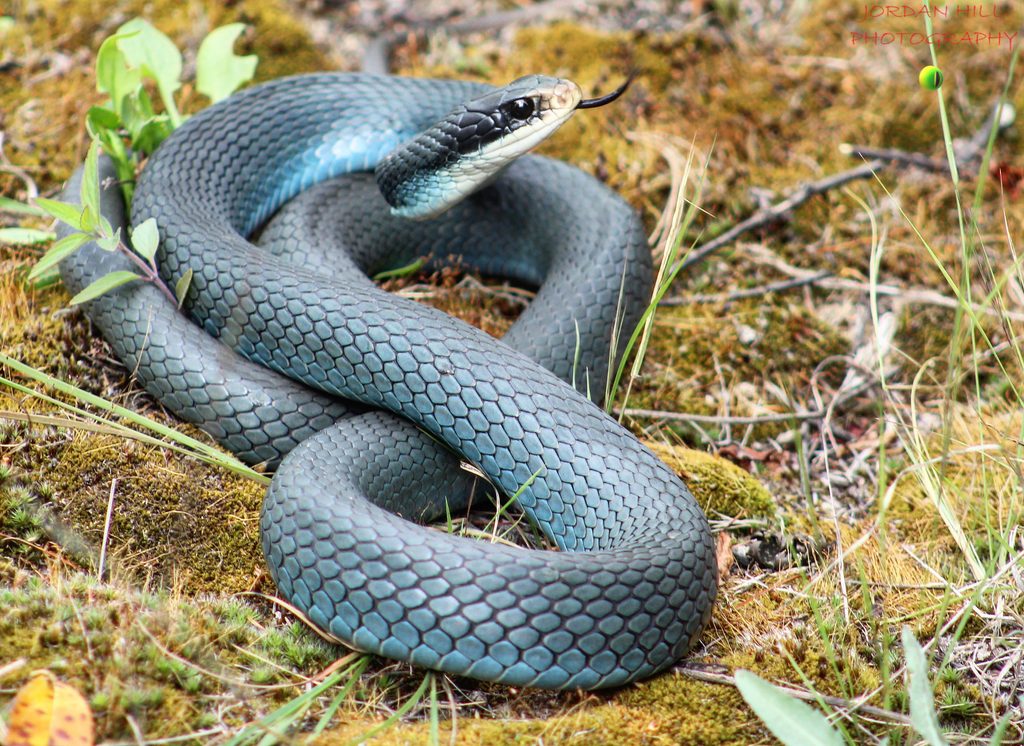
Picture of a Blue Racer Snake.

Blue Racer Snakes grow to three feet or more long.

Authors Note: I think the workers dug into a nest of Blue Racer snakes. They are common throughout Michigan and Wisconsin including the southern Upper Peninsula. Blue Racers commonly grow to lengths of three to six feet long. They are very fast and are non-venomous though they can act formidable.

For more information on Blue Racer Snakes, click here.